Tolkien and the Secret Story of the Elvish Language

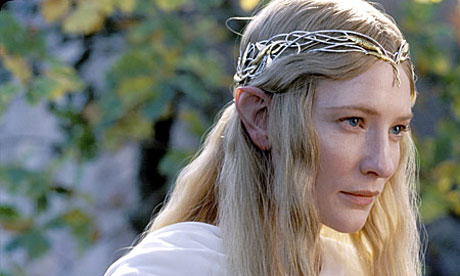
Cate Blanchett, Elf Queen

Many are familiar with Norse myth elements in J.R.R. Tolkien’s “Lord of the Rings” series. “The Hobbit,” the most recent in the film series, is now in theaters, and as with the other LOTR films, features Elvish, a language created by Tolkien, who was an accomplished linguist in addition to being an author.

My friend Kari Turi, who is of Sàmi heritage and happens to speak both Finnish and Welsh, was astounded when, on viewing the films, he understood the Elvish. What a thrill that must have been!

Listen to Elvish being spoken by Tolkien himself and find your name in Elvish here. (Mine is Nienna Carnesîr.)

Have you seen the movies or read the books? Do you know of other Sàmi connections?

The reindeer people under threat this Christmas – Survival International

In pictures: The reindeer people under threat this Christmas - Survival International

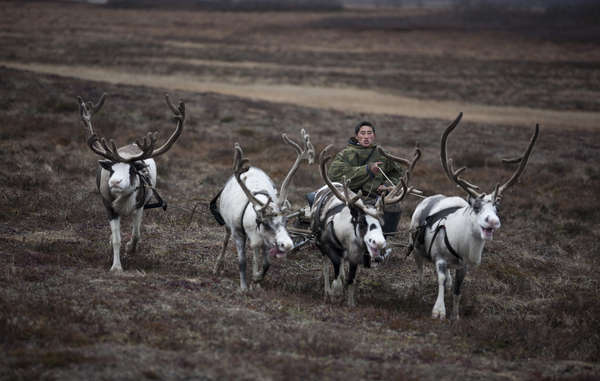
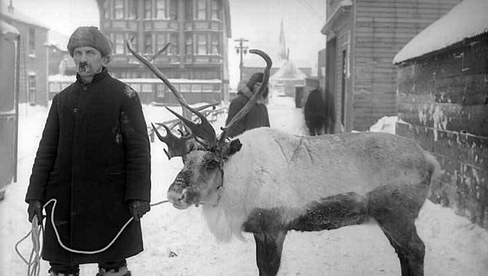
Survival International has published a seasonal picture gallery to emphasize the reindeer’s key role in the lives of the world’s northern tribes.

Survival’s Director Stephen Corry said today, ‘For many people around the world, reindeer are synonymous with the festive season. Few of us know, perhaps, that for various northern tribes the animal is integral to their survival and their human story. It is a great tragedy that the burgeoning Arctic extractive industry is exacting such a heavy toll on reindeers and their herders alike.’

via In pictures: The reindeer people under threat this Christmas – Survival International.

And from Greenpeace International:

Please help us to defend the rights of Indigenous Peoples of Russia!
One day before the opening of the Arctic Council meeting in Sweden, Russian authorities moved to suspend the activities of RAIPON (Russian Association of Indigenous Peoples of the North), the country’s main organisation representing the Indigenous Peoples. Basing their decision on an interpretation of inconsistencies in the organisation’s bylaws, this seems to be a thinly veiled attempt by the Russian government to silence the voices of Indigenous Peoples who are speaking out against the dangers of drilling for oil in the Russian Arctic.

But we have an opportunity here: YOU have the power to stop this censorship.

Let’s flood Russian President Putin’s inbox with millions of letters, expressing our deep concern about the suspension of RAIPON. We must remind the President of the vital importance of Indigenous Peoples’ voices in the legitimate political process around the Arctic, both in Russia and on the international stage. Make any changes you want to the letter, sign it, and send! And then forward on to everyone you know. Together we can defend the Arctic and the rights of its people!

Please sign the petition here.

Ancient Origins of Yule

Recently I was asked to create a small exhibit at the Swedish Cultural Center to illustrate the ancient origins of Scandinavian Christmas traditions. Below are the tidbits I pulled together (only a few of which made it into the display). The objects in the display, owned by the Center, include beautiful weavings and Yule decorations such as a Julbok, a cheese press marked with an “x” to keep away evil, and a Christmas porridge bowl.

Update: There is a fascinating account of Christmas traditions in Sàpmi here, and an exploration along of pagan Yule traditions from a Norwegian perspective here.

Are any of these surprising to you? Do you have any corrections or additions? Please let me know in the comments.

Date of Christmas
For the church’s first three centuries, Christmas wasn’t in December—or on the calendar at all. December 25th already hosted two other festivals: natalis solis invicti (the Roman “birth of the unconquered sun”), and the birthday of Mithras, the “Sun of Righteousness.” The winter solstice, another celebration of the sun, fell within a few days. Roman church leaders decided to take advantage of the popularity of this season when they chose the date to celebrate Christ’s birth, an event that probably occurred in the month of September.

Continue reading

Your Help Needed for Grad School Project

https://sphotos-a.xx.fbcdn.net/hphotos-ash3/535074_10150711184148123_1698520060_n.jpg

Friends of Sámi heritage, can you help an American student with her project?

Kjirsten Winters is a Norwegian-American graduate student in occupational therapy at the University of Puget Sound in Tacoma, Washington. She is seeking help with a project exploring the racism and marginalization the Sámi have suffered under colonialism in Scandinavia. As this prejudice is often difficult for Americans to see, much less understand, it has much to teach us about how we perceive race.

As the result of her research, Kjirsten is creating a handmade book that includes photos, illustrations, and narrative. The book will not be published, but Kjirsten is willing to make color copies for interested contributors.

Her timeline is short, with submissions due by Friday, December 7th.

Continue reading

Retracing Roots: Generational Shame

Melissa Lantto has a compelling post over at Retracing Roots about perceiving some self-destructive behaviors (such as alcoholism) within her adopted Sami community, and tying them to the indigenous experience of assimilation.

This comes close to home for me, having discovered that within the same family line (from Swedish Lapland), I am the descendant of both whiskey merchants and Laestadian clergy. Laestadius was the 19th century half-Sami religious leader who demanded complete temperance from his followers, and is alternately credited for preserving Sami culture and criticized for burying it under a severe, fundamentalist doctrine.

Sami or not, we are each of us descended from the colonizer and the colonized. Does our heritage inform our current choices? Can we reconcile competing narratives? What stories do we share with our children? In what culture do we located our “pride”?

Continue reading

Penny’s Story

Samuel Balto, 1898 in a photo by Čáliid Lágádus via Norske Polarhistorie

It has been over 30 years that I learned about the “family secret” of my Sami heritage.

In about 1978, my mother’s cousin, May, called to ask for photos, since she was making a trip to Karasjok. Married to a Japanese-American over family protests, I answered that I didn’t think they would be interested, since my mother had always said that my grandparents would have been upset over this marriage.

“There are some things you don’t know about yourself . . . “

May responded “Well, there are some things you don’t know about yourself,” and proceeded with the story of the Sámi who came to the United States in 1898, hired to teach the Alaskan Eskimos reindeer husbandry. In that group were my great-grandparents, Anders and Marit Balto, their daughter, my Aunt Mary, and great-uncle, Sam Balto, foreman of the Sámi group. Well I thought this was exciting and exotic, especially after being a “European mutt” amongst a wonderful Japanese family of Samurai heritage.

Continue reading