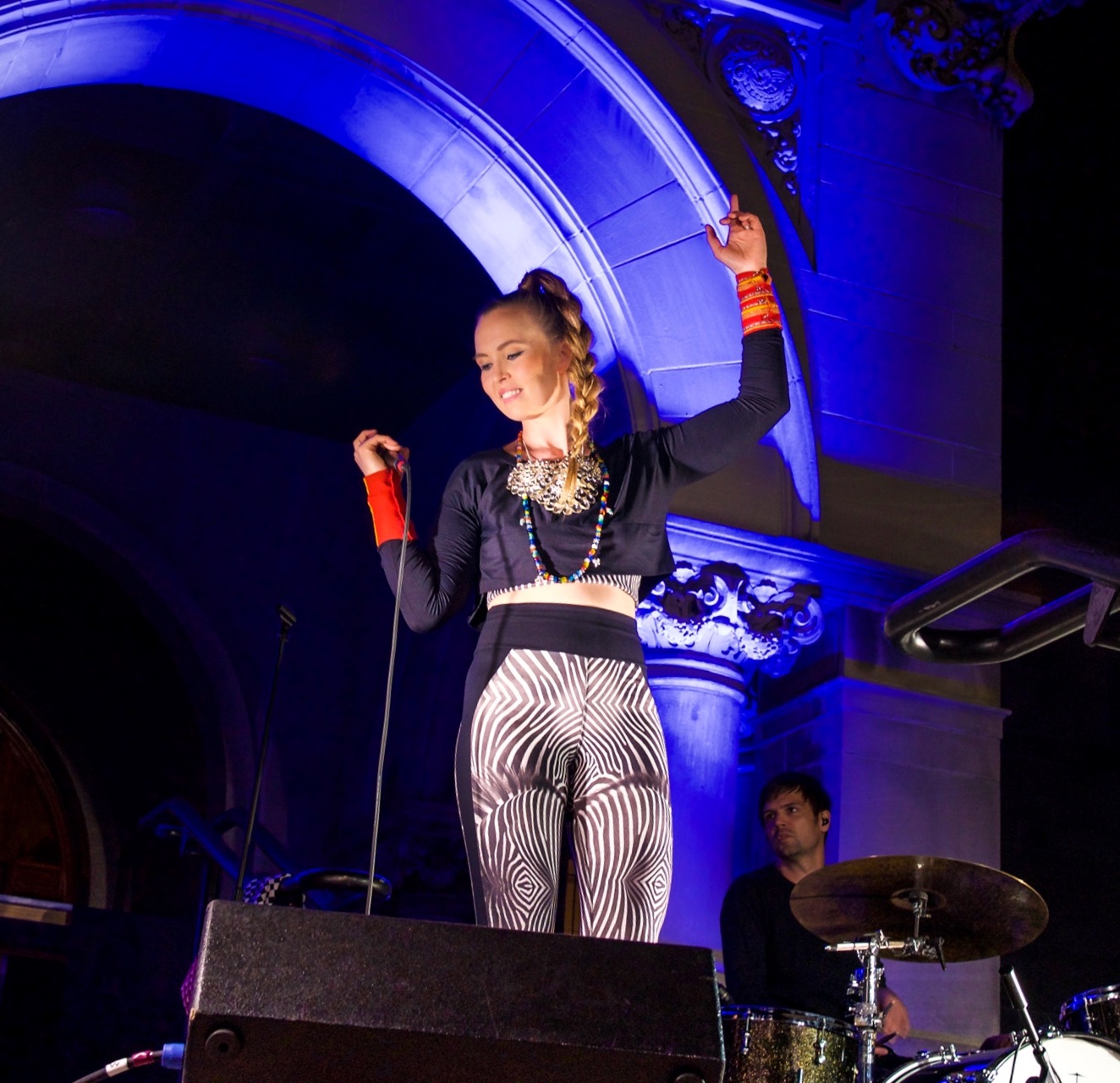
Mu Eadni / Mother of Mine

It’s a scary time. 

International law? Unenforceable. Convicted felon for president? Probable. Rollback of women’s rights? Happening.

As fascism bares its teeth, we must not take for granted the freedoms we’ve gained. They can be lost in one election. 

Those are my thoughts as I listen on repeat to this beautiful song by Mari Boine. I feel my heart slow. It is good medicine for those of us with a mother wound, recent or ancient, which is, I suppose, all of us.

In the introduction (below), Mari explains that her mother was a Laestadian Christian. For those yet unfamiliar, the faith is named for its 19th century Swedish Sámi founder, Lars Levi Laestadius, who finally succeeded in Christianizing the Sámi, or so it is said, after hundreds of years of failed missions. But it was not so simple.

Long before “woke” meant “aware of historical oppressions,” Laestadians referred to themselves as “the awakened”: aware of an embodied, transformative experience of the Divine not available through performative religion. Colonial power dynamics remained, however, shifting from male priests to male lay preachers, while principles like simplicity and moderation hardened into performative taboos. My own Laestadian mother, who died in 2021, never wore makeup or jewelry (other than a wedding band), never had her hair cut or styled, never saw a film, concert, or ball game, never played an instrument, never tasted wine, never heard a woman preach, never had her own bank account. Married at 17, she had nine children, and when her daughters chose different paths, she was profoundly hurt. I l often wished that I could free her, like a bird from a cage, and I suspect she felt the same about her mom, whose life was even more restricted.

Would Mari’s mom have attended her concerts had she been able to do so in disguise, without her Laestadian community punishing her for it?

Perhaps, in a way, she is at every performance, as transported as the rest of the audience, free to be carried away by beauty. It’s a lovely thought, and while I’m at it, I’ll place my mom, her distant relative, alongside, smiling and swaying.

Bravi tutti, Mari Boine and band, Knut Bry for the videography, Vojta Drnek for the editing, and Outi Pieski for the amazing art. Great work. (I am chuffed that my translation is captioned.)

Introduction

Mu eadni / Mother of Mine is a song of love and lament for the woman who gave me life, and for all women who suffer under systems that shame and subordinate them. As a Laestadian Christian, my eadni was bound by strict gender roles, and that insidious association of the feminine with sin. She was taught to be self-denying: that her highest purpose as a woman was obedience. (To males, naturally, all the way down.)

When her daughters resisted, she felt it was a personal failure. And yet, she was Sáami, with echoes and stirrings from a much older worldview, one that celebrated the feminine, that found purpose in reciprocity, not hierarchies. Sometimes, I feel her with us, free from shame, sharing our freedom. Smoothing our fringe. Adjusting our belts. Asking us to twirl.

Mari Boine

Mu Eadni 

You were not permitted to preen

Not for you the silken liidni

Nor were you allowed to dream

Of glamour, or vainglorious gákti

Feminine desire you had to condemn 

You could not defend even your own daughters

For pleasures of the flesh

Could open the soul to sin

O mother of mine, mother of mine

If I could draw you close again

I would swathe you in silk and pearls

Ribbon you in silver and gold 

Adorn you and adore you

So we three daughters, free

Could recall you to unshamed joy

You were not permitted to preen

For pleasures of the flesh

Could open the soul to sin

My mother, O my mother

Our mother, O our mother


Found in Translation

Crystalline prose that reads like poetry and myth at once. There are intricate layers of beauty and meaning here in sparse clusters across a vast new landscape as I’ve never read before. The music of this book is old, and it is new, and it is old.

Tommy Orange, There, There and Wandering Stars

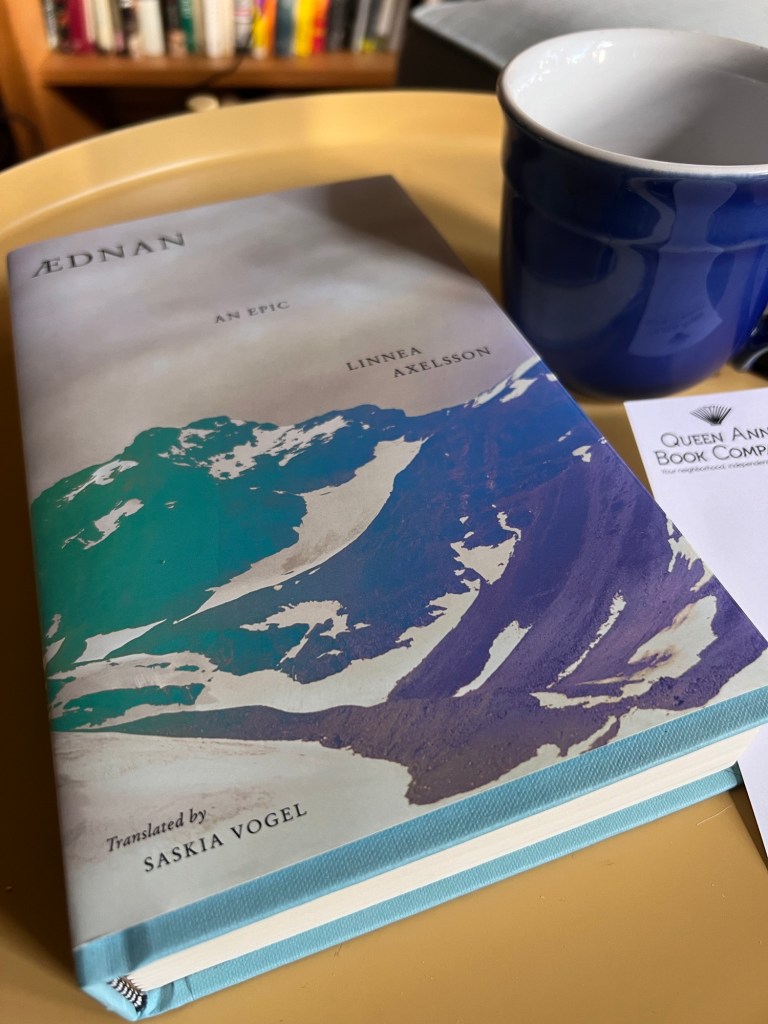
Since it was published in Sweden five years ago, I have been eager to read Linnea Axelsson’s much-celebrated Ædnan, so I was thrilled to receive it as a birthday gift this week.

It was nicely timed; the author will be signing books in Seattle next Monday.

Check out her golden Washington Post review.

The title Ædnan is an old North Sámi word for earth, land, mother, and woman. It shares the same root as eatnat, meaning much, a lot, great (from Proto-Samic eanëkën). I love how this one word holds the key to the Indigenous worldview, grounded in the experience of nature: as source, mother, abundance.

It occurs to me that Land Back, which has several meanings, is a call for universal rematriation. In Isaac Murdoch’s words, “people returning back and finding their place in those systems of life.” (Sadly the term still seems to activate more fear than understanding. Perhaps it could be reframed as Operation Prosperity Guardian?!)

I also love how eadnán appears so frequently in Sámi songs and poems, a few of which I have had the privilege of translating, most recently Mari Boine’s ballad Eadnán bákti (a Sámi poem by Kerttu Vuolab). “To Woman” is the English title.

Translating is always transcreating; in the process a new creature emerges, and one hopes it will fly. Sometimes the English words look like wings, sometimes like a clumsy giella (the Sámi word for both language and snare).

A bit like stuffing a fluttering, iridescent-feathered bird in a beat up old box that was designed for commerce, sports, or conquest. As some kid somewhere is intent on associating that box with farts in the Urban Dictionary.

I am consoled by the idea that my Sámi ancestors perceived language itself as the giella. The trap. After all, communication precedes and transcends words; it flows continuously through and between and inside and around us. Even in silence.

Ædnan contains a lot of silence. The physical heft of the book is not from ink, but from its snowy fields and margins. Evocative of Sápmi at this time of year.

I am eager to see how the book’s translator chose her snares. (I have bookmarked here her post about the process.)

If you read Ædnan, please let me know what you think.

Other local-ish events of interest:

Sámi Film Festival, with guest curator Lisolette Wajstedt, Seattle and online, Feb. 8-11

Vástádus eana – The answer is land Elle Sofe Sara in Vancouver, BC , Feb. 23-24

Wishing you a happy Sámi álbmotbeaivi next week.

Stay warm!

To Woman

I am thrilled that Eadnán Bákti (To Woman) has dropped from Mari Boine’s new album Amame, a collaboration with the fantastic Norwegian jazz pianist Bugge Wusselhoft. There is alchemy between the two: her exploratory, expressive, tremulous vocals weave through his tender lyricism like a light embrace. Like a silk shawl around your shoulders, or lakewater warm from a month of midnight sun.

While it isn’t necessary to understand them to enjoy the song, the Sámi lyrics by poet Kerttu Vuolab are both lamentation and tribute: they speak to the experiences of women under patriarchy and to the enduring, divine feminine that abides within and around all of us. The album’s lyrics in English are my small contribution to the album. Rarely a direct translation, I hope they are suggestive, like that Zen saying: “Not the moon, but a finger pointing to the moon.

Here is where you can pre-order Amame, which will be released on September 29, 2023. Not sure it matters, but I receive no financial benefit from your purchase. In fact, I have something to give away.

Ticket Give-Away

Because of a foot injury, I am unable to jump the pond and join Mari and Wardruna for Nordic Night at the Borgholm Castle on July 8th. It will be their first performance together since they brought down the stars (and a full moon) at Red Rocks in October of 2019. This show promises to be just as epic.

I have two tickets to give away. Send me a message pronto if you can use one or both. (And tell me how you will share your experience. Cuz it’s relationships, relationships, all the way down!)

Eadnán Bákti / To Woman

Original lyrics by Kerttu Vuolab
Music by Mari Boine
English lyrics translation by Julie Whitehorn

Like a mountain

Like the ocean

Like the heavens, you are

Just as majestic

As mobile and light

They held you down for a long time

And kept you silent

But life itself is on your side

Helps you rise

Like a flower, you are

Our mother’s tongue echoes in me

As your words

Bringing understanding

They sing in me

You are no prisoner

Nobody’s servant

You are not lesser than 

You, too, deserve consolation

When so much is demanded of you

They still gaslight you

Because they know your honesty

Their crimes to hide

With lies

You are grandmother

Mother

Sister

Woman

They fear you, for they know

You have life on your side

Fly like the bird you are

Trust you are a flower

Uses of Enchantment

One of the most rewarding aspects of expanding awareness of Sámi culture is helping friends refine English versions of their Sámi texts.

Ville is a joy to work with.

In addition to his resonant voice and righteous saxophone, he is blessed with a wry poetic sensibility. I love his humor. On this song, he collaborated with several phenomenal artists: Hildá Länsman (joik, vocals), Jan Ole Kristensen (guitar), Svein Schultz (bass), and Gunnar Augland (drums).

A thought: if it’s true that art can help subvert our dominant, destructive paradigm of endless economic growth, maybe there is also a case to be made for translating art. Particularly poetry from indigenous languages.

Poetic language, like holistic epistemologies, is often elusive, elliptical, prismatic, labile, contextual, and subversive. It resists a single meaning. At its most powerful it welcomes and expands the ego, the lonely individual, connecting one to all, and all to life.

Bring on the revolution!

Sofia Jannok and Sámi Solidarity

I’m honored to publish this guest post by my cousin Linsey, whose big heart shines through her writing. We met earlier this year through a DNA match, and I was able to share the suppressed history of our immigrant forebears in Swedish Lapland, whose suffering and resiliency gave rise to our own lives. I hope you’ll read to the end, and leave a comment. — Julie

Guest post written by Linsey Schad with photos by Jeff Schad Imagery

Earlier this summer I had the most amazing pleasure of seeing Sámi artist and musician Sofia Jannok speak and perform while she was here in Minnesota. To say that it was an incredible experience cuts it short. To say that it was eye-opening and emotionally charged is getting a little bit closer. To say that it was a crazy-intense-spiritual reawakening? Well, that hits the nail square on the head! It was absolutely inspiring to see a woman today so fully living her essence and purpose in the stewardship of her people, her land, its resources, and herself. She is a protector of our Mother Earth. We need more people like her.

FullSizeRender (2)

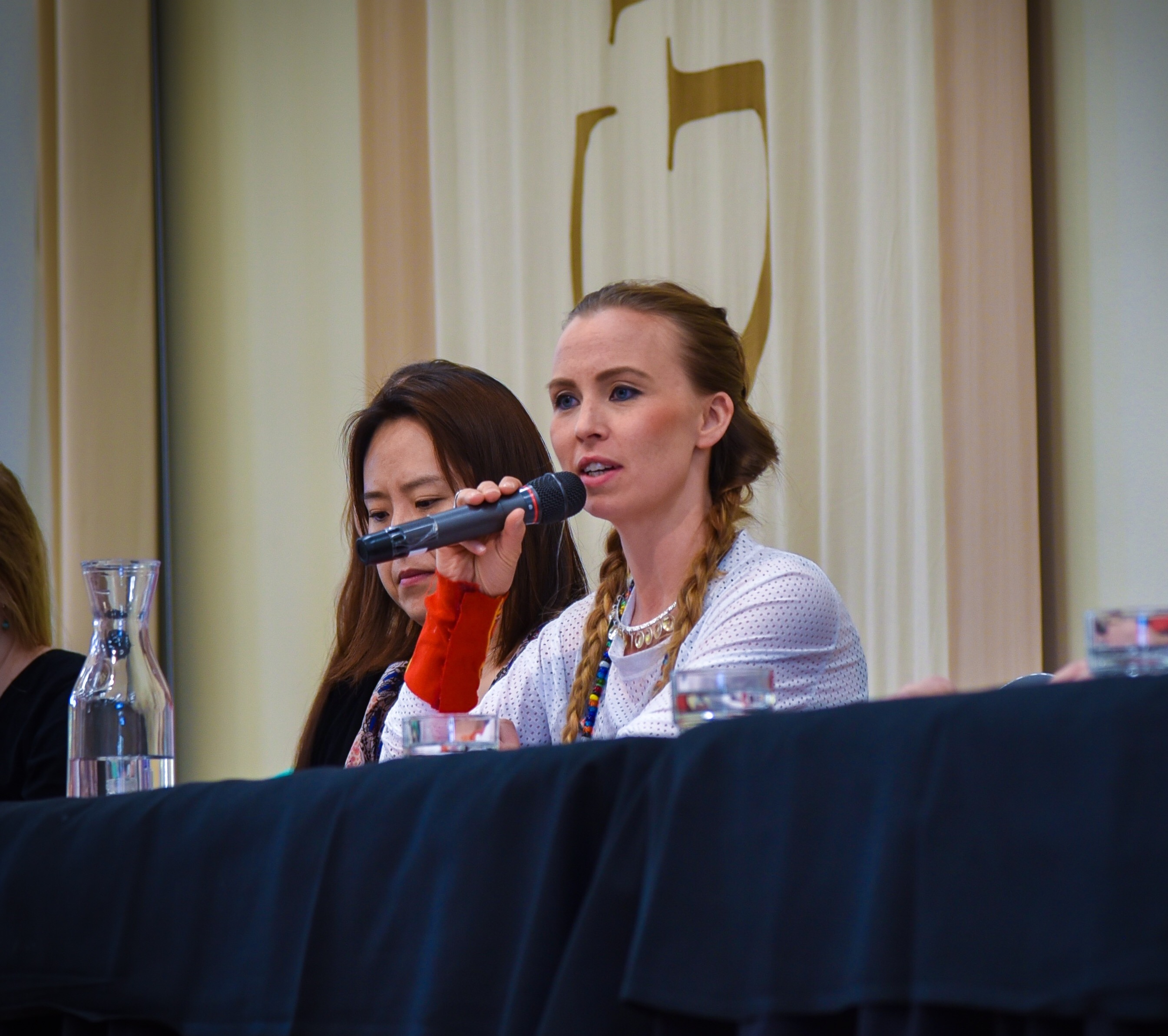
I went into the three days with Sofia wanting to connect more to my own Sámi roots and ancestry. The first event I attended was a panel discussion on Indigenous issues at Gustavus Adolphus College, where she was this year’s Artist in Residence. Going in, I was familiar with how the Sámi people have been treated throughout history, but as I listened and learned, I found myself increasingly aware of just how much injustice is actually taking place TODAY, and what the Sámi people are dealing with right now, as we speak, where our ancestors came from. My heart still hurts remembering Sofia say in tears that she just wants to live and to know her people will remain, not to have to raise her fist to fight, or even to have to take part in panels, but to just be allowed to live free the way she and her people know is right for them. She spoke not about the past but about vandalism, mistreatment, and many suicides that are occurring RIGHT NOW.

FullSizeRender (3)

Photo credit: Jeff Schad Imagery


“Everything is told as if we were not here. My mission, my purpose, my message as an artist is not to cry over lost times, lost land, and lost rights but getting everyone to get it: we are still here!” Sofia Jannok

The next two nights were absolutely magical seeing Sofia perform, first at Gustavus and then at the American Swedish Institute in Minneapolis. Words cannot describe the pure energy and emotion that comes through her music. It was more than music; it was a meditation, a prayer, and a healing balm for my soul. I can only hope that it was this powerful for others. Hearing it live was like hearing the Earth herself sing! Regardless of language, the feelings and energy that comes through are universal. I was also struck by the integrity Sofia displayed in choosing to share the concert at Gustavus with Lyz Jaakola, an Ojibwe-Anishinaabe musician, expressing the importance for the local Indigenous voice to be heard too. This was such an exemplary, selfless action, and all too rare in a world where no one wants to share the spotlight. She fully embodies what a role model today should be. How we all should be.

IMG_2534

After the magnitude of these events settled in and I began to write this blog post, I felt that just relaying my own experience was not enough. The seriousness of the Sámi peoples current issues hit me hard and I began researching. I reached out to Sofia with some questions and she kindly responded. The main question: how can those of us here who find out we have Sámi ancestry, actively give help to the Sámi people living today? Here is what I learned (naturally these are my personal reactions to information received from Sofia).

  • There is a HUGE lack of knowledge about the Sámi. The children are not taught about them, the universities don’t speak of them, and most of the population know very little about them. The dominant powers there have singled them out to be exploitatively erased because of a need for their resources and their land and because of this their story is seldom told. When there is no open knowledge about a culture it breeds racism. I have been shocked to see this blatant racism portrayed in contemporary fiction from the region and I can only imagine this representation is close to the truth. It’s sad to find such a dark side to Sweden, considering it’s supposed to be the most democratic nation in the world.
  • The Sámi people are not being honored respectfully and equally. Racism and systematic oppression set the stage for objectification and exoticification. As this happens a detrimental loop of exploitation begins and the sacred pieces of Sámi culture, their clothing, jewelry, music, buildings, and traditions have been hijacked and turned into commodities. They have been stolen for tourism or novelty and are used rather than revered. For centuries the Sámi have been made to be “tourist attractions” and Sofia explained that this is still very much reality today. True honoring of a culture comes not from a place of ego or economy but from genuine humanistic compassion. Instead of using their clothing or customs, we can learn their real story, who they are and ask them in what ways they’d like to be honored.
  • The politics and mining are destroying the land forever. Due to the rich resources Sápmi contains and the large amounts of money they translates into, the mining industry is allowed to continue expanding and destroying the beautiful native grazing lands forever. I was amazed to learn that the entire town of Kiruna is moving in order to accommodate the mines expansion there. This is an area the Sámi have all ready been forced to move away from for generations and the same company has two more mines planned in the near area. Another is planned for Laver and the Sámi community there is asking for help. Recently a wind power park opened up making the grazing land there inaccessible. Across the entire region these things are happening and this is all done despite protesting and without their permission. The dominant powers are methodically destroying their land for money and disallowing this ancient culture from continuing it’s way of life. In my reality, that constitutes a crime against humanity and a rape of our beautiful planet. This is everyone’s problem.
  • The Sámi people need to be able to share their point of view. Just like here in the US, the media is skewed in Sweden and fails to give appropriate voice to the region’s indigenous population. Sofia expressed that social media and music are ways for her to get the untold story out, completely uncensored. She shared some websites that are also working to operate from a true Sámi perspective:

www.samer.se
www.sr.se/sameradion
www.saminuorra.org
 www.sametinget.se

We can follow and support Sofia Jannok and her Árvas Foundation: www.sofiajannok.com facebook.com/sofiajannok
www.youtube.com/user/sofiajannok
www.instagram.com/sofiajannok
www.arvasfoundation.com

And follow amazing photography and stories from:
www.instagram.com/cjutsi
www.instagram.com/annamariafjellstrom

IMG_2539

IMG_2536

So, how does this translate for us North Americans with Sàmi heritage ? I’m not exactly sure yet but there are many ways we can act, both collectively as a community and individually. Armed with knowledge, we can effectively shape how we honor, relate to, and relay the story of our ancestors while finding ways to lend support in protecting the land, way of life and culture. Maybe we can assist those who are finding ways to bring Sámi art and music here. Maybe we can search for new methods to get their stories out and told in a true way so they are no longer the only ones to carry it. We can follow and support Sámi people online and positively connect through direct interactions. We can work to help our planet Earth, the environment, the endangered Arctic region, and climate change in general. We can learn about and help our local Indigenous communities, remembering just how we came to occupy this land. We can teach our children to actively listen to others and with empathy.

If we REALLY put ourselves in another’s shoes, trying to understand them not from our own perspective but from THEIRS, only compassion and love can remain. All of these things will help.

What do you think?

— Linsey

My Lucky Sámi?

Following is a book review by my friend Xavi, chair of the Sámi Siida of North America (SSNA), an artist, history buff, and all-around swell person. I met Xavi at the 2012 Siidastallan, the bi-annual gathering of Sámi-Americans. In addition to a love of all things Sámi and French, it seems Xavi and I both have Gold Rush relatives. As I have no family in Seattle, where I’ve lived since graduating college, I was surprised to learn recently of family ties not only to Seattle and the Sámi Reindeer Project, which continue with my distant DNA-cousin Lloyd’s reindeer in the Northwest Territories, but according to geni.com, to one of the “Three Lucky Swedes,” Jafet Lindeberg.

Jafet Lindberg reportedly founded Nome, struck gold, ran with masked vigilantes, and was portrayed by John Wayne in the movie The Spoilers. If geni.com can be trusted, he is related to “my” Lindbergs of Norbotten, who have Sámi ancestry, and it seems, boatloads of entrepreneurial pep.

Many thanks to Xavi for his review, and to the Solbakks for translating these valuable letters. I’ve ordered the book and can’t wait to read it.

Book Review

by John Edward Xavier

Sami Reindeer Herders in Alaska: Letters from America 1901-1937

A hundred and twenty years ago there began the American Reindeer Project in Alaska, probably the most heroic and yet profoundly human Sámi involvement in North American history. In the ever-growing body of work recounting that history, a valuable book has now been contributed by Sámi authors and editors Aage Solbakk and John Trygve Solbakk along with their Sámi publisher ČálliidLágádus. The Solbakks’ work comes to North America now in Sámi Reindeer Herders in Alaska, as a translation of the original 2009 Sámi language publication under the title Sámit balvalusas Alaskas. This welcome English language version, solidly translated by Kaijja Anttonen, opens new doors to yet another view of a landmark in Sámi North American history, the Reindeer Project.

Now, well over a hundred years later, there remains considerable interest in this entire era (1894-1930s), and so the Solbakks publish in that context as well as that of today’s increasingly active North American Sámi communities. Those communities and other North American audiences continue to be attracted to the many tales of reindeer herder families who became gold miners, many of whom moved to the Pacific Northwest where their descendants can be found today. That colorful era of 1894 to the 1930s has persisted as a topic revisited and reinterpreted by film-makers, novelists, and many researchers, who continue to use varied approaches, for which a couple of prominent examples come to mind.

Among those contemporary projects, there is the long-standing exhibit, “The Sámi Reindeer People of Alaska,” soon to re-open in Hibbing, Minnesota. This exhibit, the fruit of long-time Sámi-American activists Faith Fjeld and Nathan Muus, currently features exhibit booklet illustration and layout by Marlene Wisuri. Secondly, there are sources in social media, including a Facebook page “Friends of Sheldon Jackson Museum.” The Sitka, Alaska museum and its Facebook page feature Jackson’s work with the Sámi. Further and earlier accounts of this fascinating topic derive from a group of credible sources such as Vorrren, Niemi, the Lomens, Sámi-American periodicals Arran and Báiki; andNorwegian American Studies  of the Norwegian American Historical Association (NAHA). This last group is referenced in the Solbakks’ work, in yet another vindication of Alf Isak Keskitalo’s landmark essay, “Research as an inter-ethnic activity,” (latest reprint in 1994, in Arctic Centre Reports), where he discussed the merits and implications of research as a starting or launching point for cross-cultural relations.

So, then, what have the Solbakks done that justifies yet another publication on the Sámi role in Alaska (and Canada)? The answer is simple: they have opened new doors by offering a fresh and close-up look at the Sámi experience through the letters of those Sámi reindeer herders (in English translation). This collection of letters is the first of its kind to see print in a book-length English-language collection with commentary. Those many letters, intensely personal and yet insightful, were written by the fully literate Sámi, and sent from North America over a three-decade span for publication in the Sámi-language newspaper Nuorttanaste, in Sápmi. This compilation by the Solbakks is in the long-standing tradition of America Letters from North American Nordic emigrants to the homelands of Europe. Given the long period of time covered in their book and the number of letters involved in their selections from the old files of Nuorttanaste, the Solbakks were obligated to pick and choose.

The Solbakks have picked and chosen well, including letters of prominent Sámi historical figures such as Samuel Balto and Johan S. Tornensis. In those chosen letters, and the many photographs, furthermore, the reader will also see many other names that echo over the centuries of Sámi history, including (alphabetically) Boyne, Eira, Gaup, Haetta, Klemetsen, Sara, and others.

The Solbakks have gone beyond a skeletal history of a succession of letters; they correctly felt moved to flesh out what could have been a mere compilation, truly skeletal in nature. The Solbakks applied professional and cultural skills and nonetheless did so in an accessible way. This work includes a substantial introduction; personal research in both Sápmi and North America for new material, especially photographs aplenty and personal interviews; commentaries on photos and topics to carry the narrative; recognition of Canadian aspects of this era; and a generous willingness to draw on letters by a cross-section of the families in question.

Indeed, the letters are the stars of the show here. This was how the Sámi kept in touch, in letters were penned by herders, wives, gold miners, businessmen, spiritually conflicted individuals, and storm victims. And indeed, the Sámi kept in touch, in what is the ever-fascinating “long reach” of this numerically small group, retaining contacts not only with the homelands through Nuorttanaste and personal letters but also with Sámi in the United States itself. The Solbakks thus confirm once more the connectivity of the Sámi, with relationships we know of from other sources as well.

As for one case of the long reach and connectivity of the Sámi, it has long been on the record that several of the first wave of Sámi had made enormous sums of money as gold miners (in the millions in today’s purchasing power, about a ratio of 100 to 1, where ten thousand dollars then=one million now). Counted as the most successful of those early gold miners was a Sámi herder who organized the first legal mining district in Nome: Johan S. Tornensis. Once he became wealthy, having removed in one year alone about $50,000 in gold, he and others similarly fixed traveled around both to the Sámi homelands and the United States itself.

One poignant letter in the Solbakks’ book involves the mass destruction of property in a great storm in the Unalakleet area in 1915, as recounted in a letter by Nils Persen Bals. Sámi icon Samuel Balto pours out a moving narrative of his historical, emotional, and spiritual experiences. Other letters include references to World War I and the Great Influenza that followed in 1919, as well as the expected keeping-in-touch mentions of births, weddings, deaths, dedication to hard work–and the waxing and waning of fortunes related to reindeer and gold. All of this recounting is through the letters, the stars of the show, carrying the historical narrative along. This book– in making available all of these narrative letters–once more illustrates the crucial role played by ethnic-based publisers, in this case ČálliidLágádus – ForfatternesForlag – Authors’Publisher.

Beyond the merit of any particular family stories and photographs, the Solbakks have offered up a work of considerable accomplishment in its perspective on history, a work that is approachable, and more than that. This book should be included in any personal or institutional library in the areas of Sámi or broader indigenous or emigrant studies, and would also supplement US, Canadian, and Alaskan history studies in general.  An improved next edition of Sami Reindeer Herders in Alaska would profit from inclusion of more legible maps, as well as the addition of brief bibliographic and index supplements. Nonetheless, this is a book that does what its authors set out to do, letting the letters be the stars of the show, and so it is a book destined for a solid position in Sámi and Sámi North American studies. This work is clearly appropriate for both personal and academic interests.

***

Photo from Wikicommons, Jafet Lindeberg, 1873 – 1962