Solidarity with Gállok

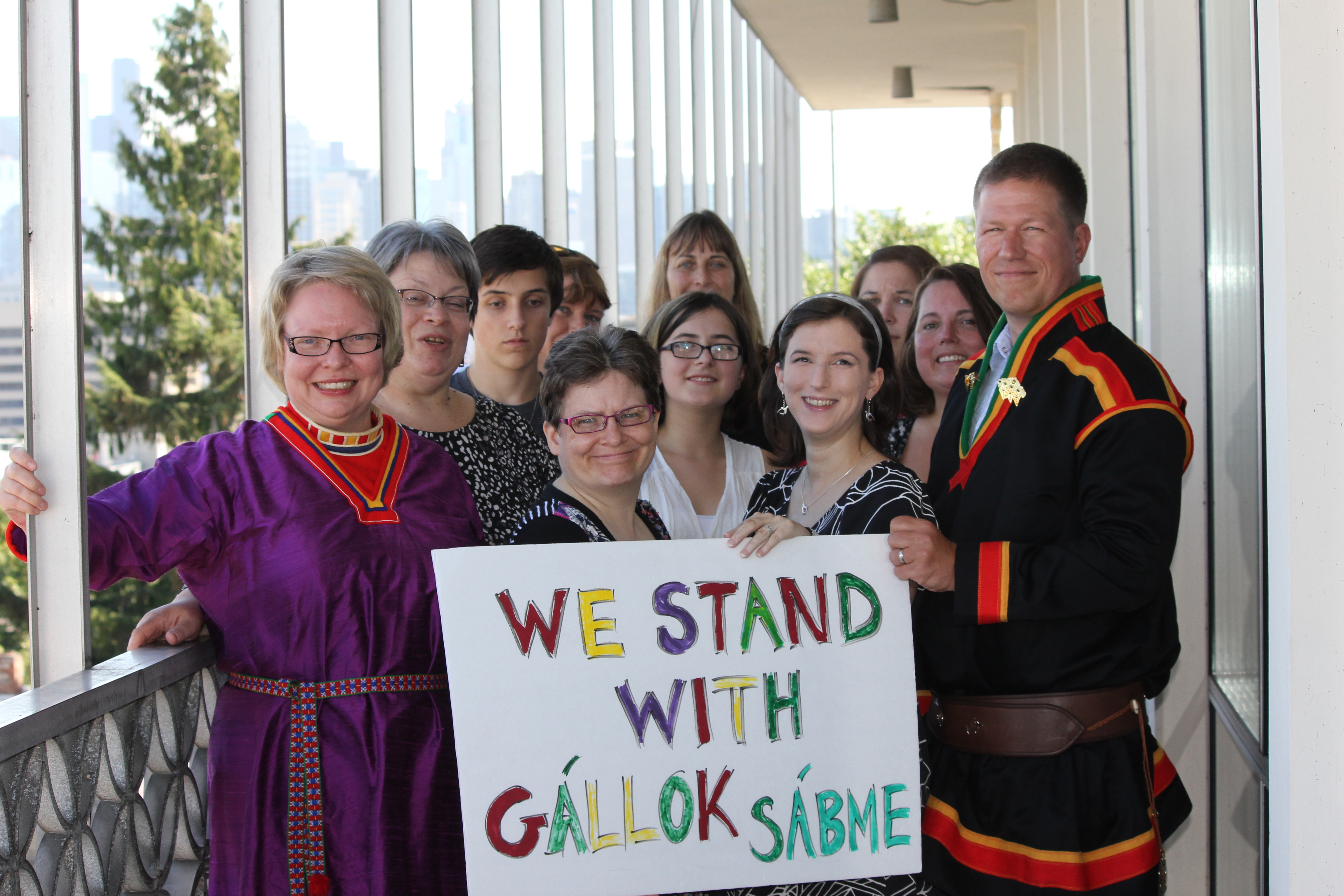
IMG_9997KallokOn August 12th, several of us gathered at the Swedish Club in Seattle for dinner and a photoshoot to demonstrate solidarity with Kamp Kallak, the group protesting the mining project in northern Sweden. Kallak is the Swedish word for the area; in Sámi it is Gállok. The mine site is near Jokkmokk, famous for its annual wintermarket, a 400+-year old tradition that has a special place in my heart, as my eighth great-grandfather Igor Ivanoff (1620-1680) is said to have traded at the first market.

Our special guest from Jokkmokk was May-Britt Öhman, resplendent in her Lule Sámi gakti at left. A dam safety researcher, May-Britt was in Seattle for a conference and gave us the nitty-gritty on the situation in Gállok, particularly the risk to the Lule River dams and water safety in the entire watershed. She encouraged our advocacy. Later we dined at a seafood restaurant on the waterfront, pounding tiny crustaceans with tiny hammers, feeling far away from the barricades yet nonetheless, united in passion.

Please sign the STOP MINING IN JOKKMOKK petition here.

Continue reading

An Evening of Yoik and Friendship

Beautiful gakti.

Visiting the Pacific Northwest from Norway last week were members of the Gaup family, who  met with our group in Tacoma after performing at Chief Leschi School. It was a magical evening of stories, yoik, and new friendships.

The youngest Gaup, Risten, is a recording artist who recently performed with her sisters at the Kennedy Center in Washington, DC.

Risten Anine Kvernmo Gaup

Risten’s father Ánte Mikkel, the reknowned yoiker, just won the Norwegian Sámi Parliament’s Sámi Language Motivation Prize for 2013 (for his work as an author, yoiker, and teacher). A engaging performer, he taught us about the history of yoik and demonstrated its variability. He even took requests, recalling various yoiks for the fox, for example. With a rapt audience and seemingly tireless performers, we could have spent the whole evening there.

Ante Mikkel Gaup

Yoik cannot be defined; it must be experienced, but this explanation helps:

For the singer, the yoik is a way to process and release emotions. It is a release and a cleansing where one can express emotions inexpressible in words. A yoik creates a telepathic link to the story or person it features. Many men have won a wife for themselves by using the yoik.

There is no way to experience the power of the yoik except to listen to it. Its natural character and the voices of the natural elements do not become apparent until the listener has thrown himself upon the winds.

The yoik has survived through the centuries. It has renewed itself and changed its meaning, but it is still indispensible for the Sámi people. To consider the power of the yoik, we need only consider how eagerly outsiders have tried to destroy it. Whether this has been due to fear or to a lust for power remains a mystery. (Ursula Länsman)

Renee listening to a fox joik.

Continue reading

Confusion and Inclusion on Constitution Day

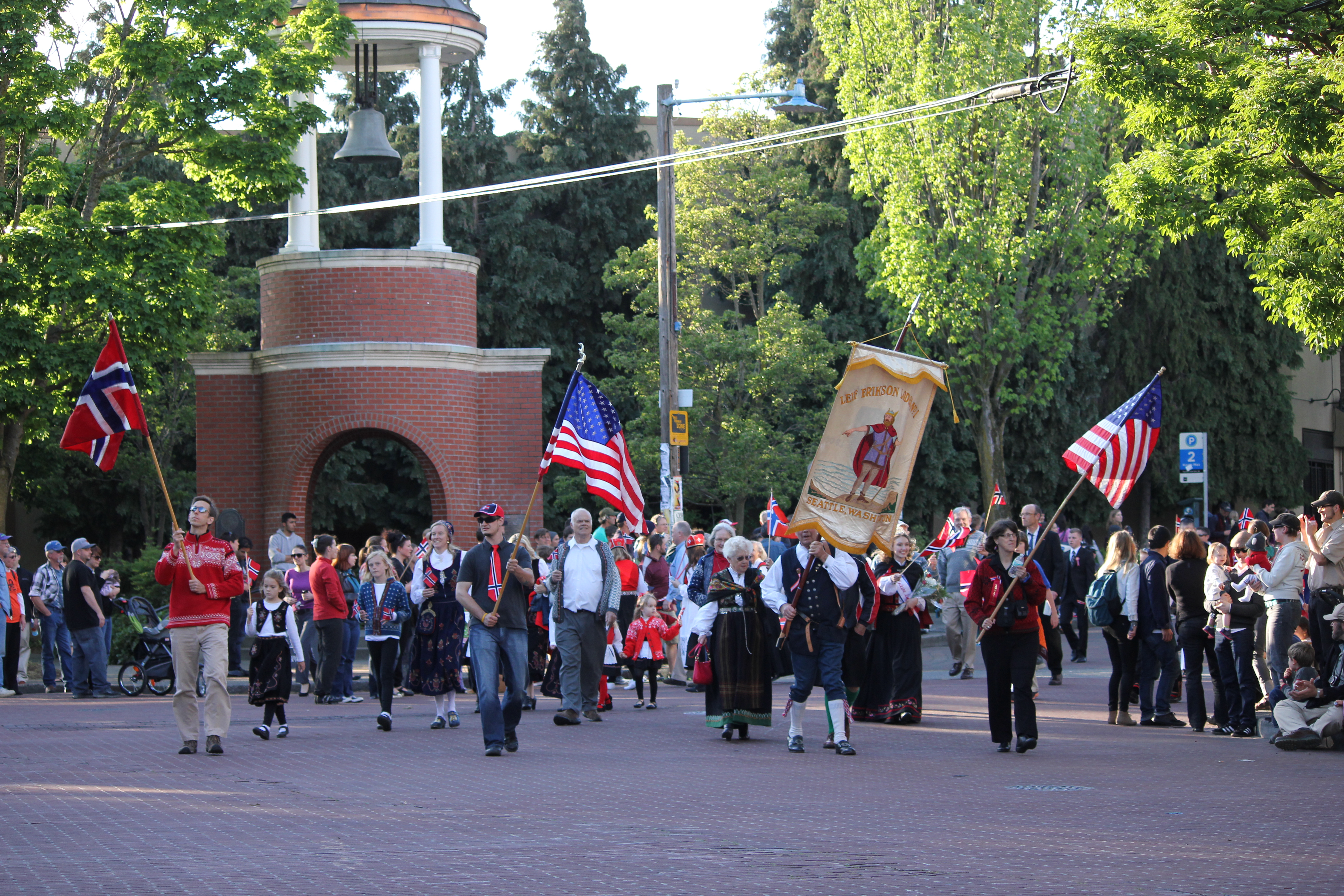
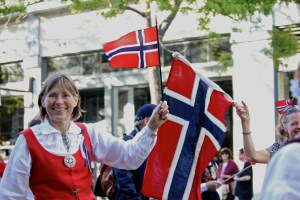
IMG_8940Depending on whom you ask, Seattle’s Syttende Mai celebration is the largest or second largest in the USA, meaning thousands attend each year, which may be some consolation to newbies who did not find parking and missed out on the fun. Having applied to march, we gave ourselves plenty of lead time, found a 10-foot pole for our flag and a choice spot on Market Street, and checked in at 5:30 pm for the 6 pm march. We were directed by a friendly official with a clipboard to wait behind a marching band.
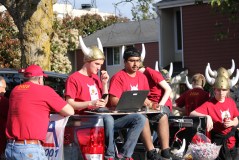
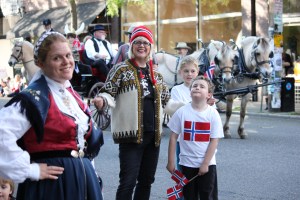
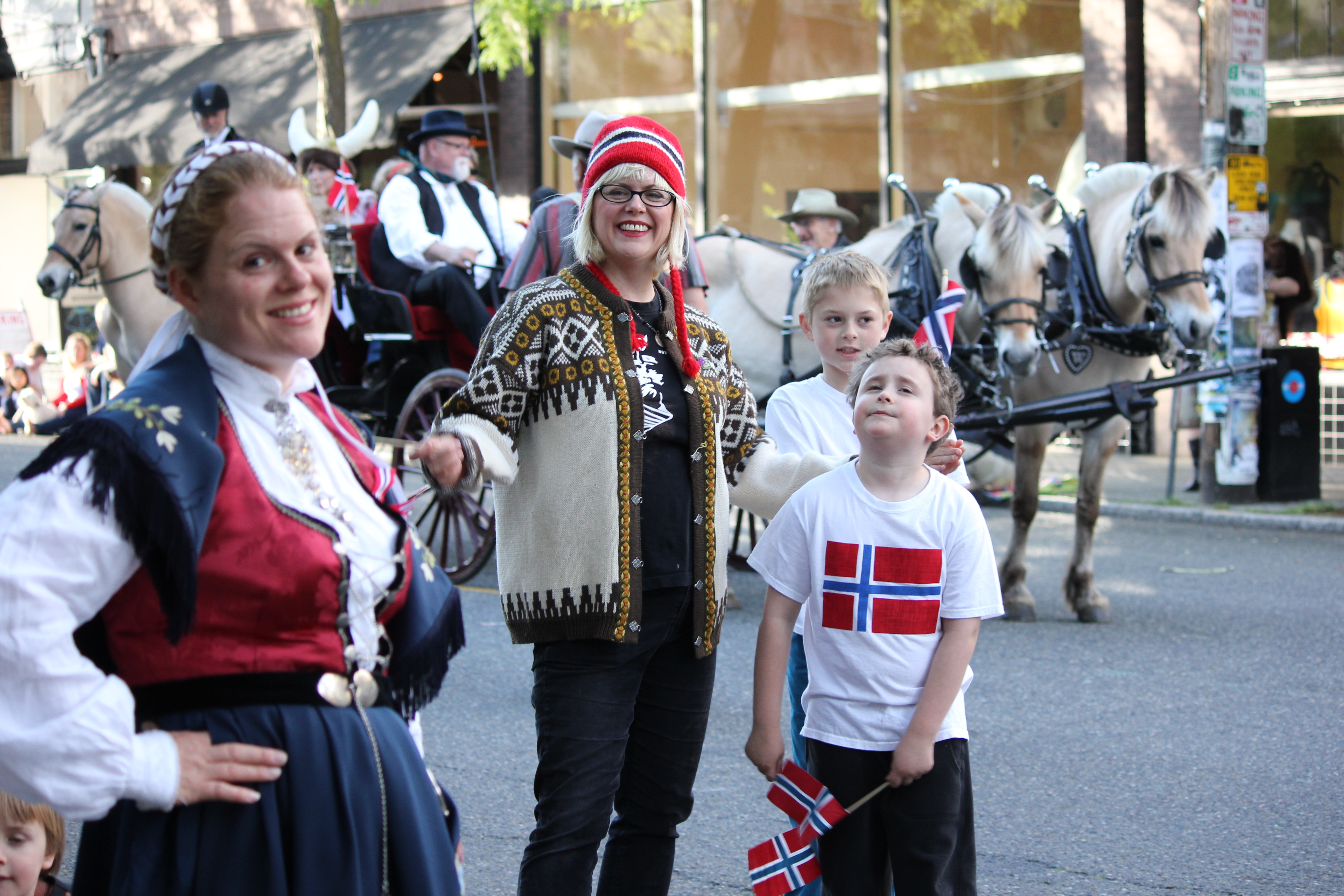
"viking" engineersNear us, engineering students with Viking horns attached to their hardhats demonstrated a remote-controlled, Frisbee-tossing robot (very cool). Drill teams in white boots stamped in place in a parking lot. At the west end of the street, gorgeous Fjord horses endured caresses and the dramatically-pinched noses of passing schoolkids. The sun shone. Everyone seemed relaxed and happy.

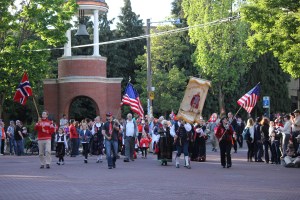
Shortly after 6 pm, the parade began to inch forward. The same official approached, scolded us for “being late,” and directed us to “go to the front of the cars.” Surprised, we hustled forward, closer to the front of the parade, in front of the marshals’ cars (Volkswagen bugs on loan from Carter Subaru, in true multicultural fashion).

IMG_8948

I spied the Norwegian consul, whom I recognized from a luncheon earlier in the day.

Where should we should march, I asked.

“Behind the cars,” he said.

We retreated, stopping briefly to greet Grand Marshal Bård Berg and his wife Bennie , resplendent in their gakti.

But before we could retreat further, the consul waved us forward:

“In front of the cars!”

We laughed. The problem with being a “first” in a century-old tradition is that nobody is sure what to do with you. We weren’t in Norway, however, where bringing the Sámi flag to the parade can engender more than confusion.
IMG_9079

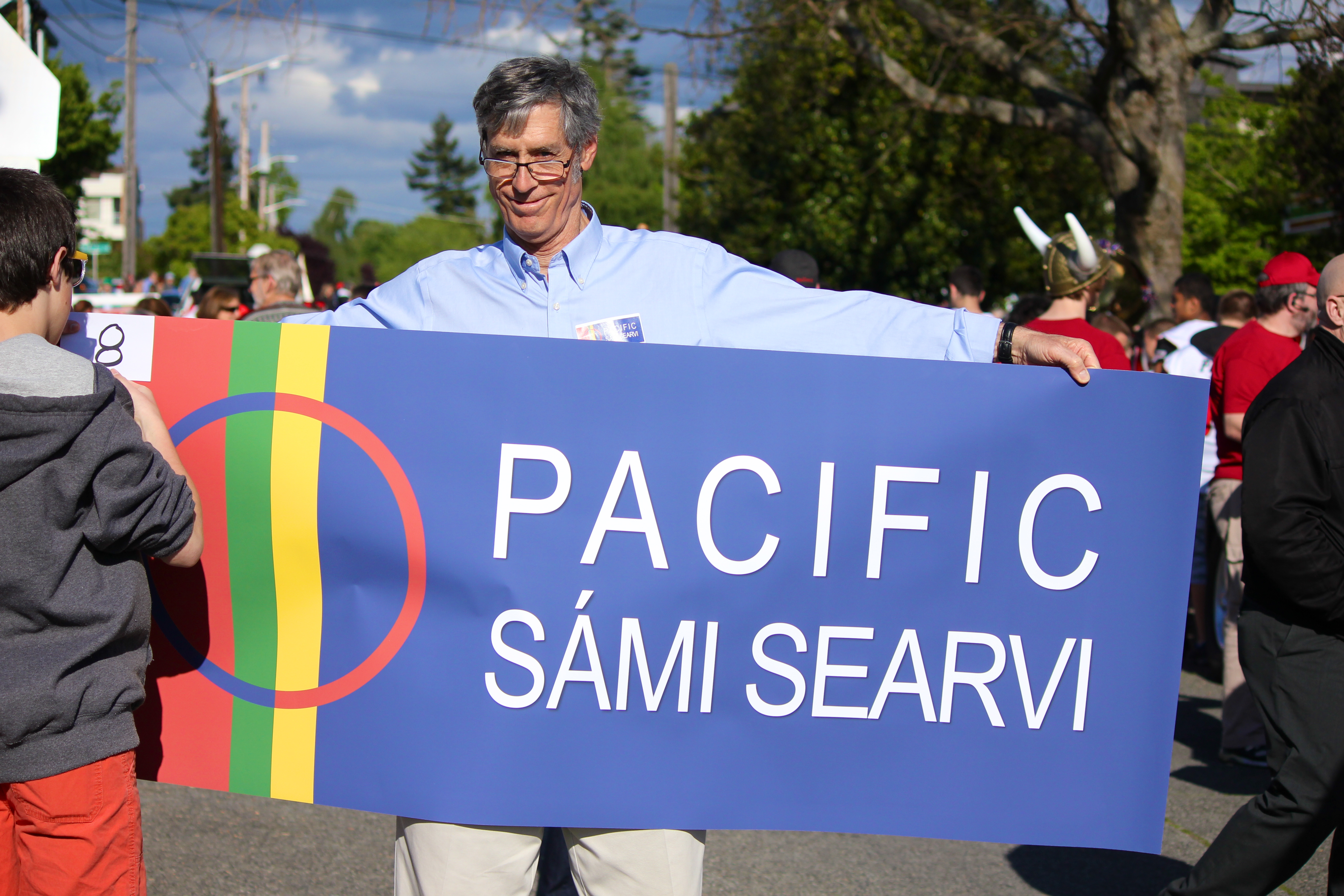
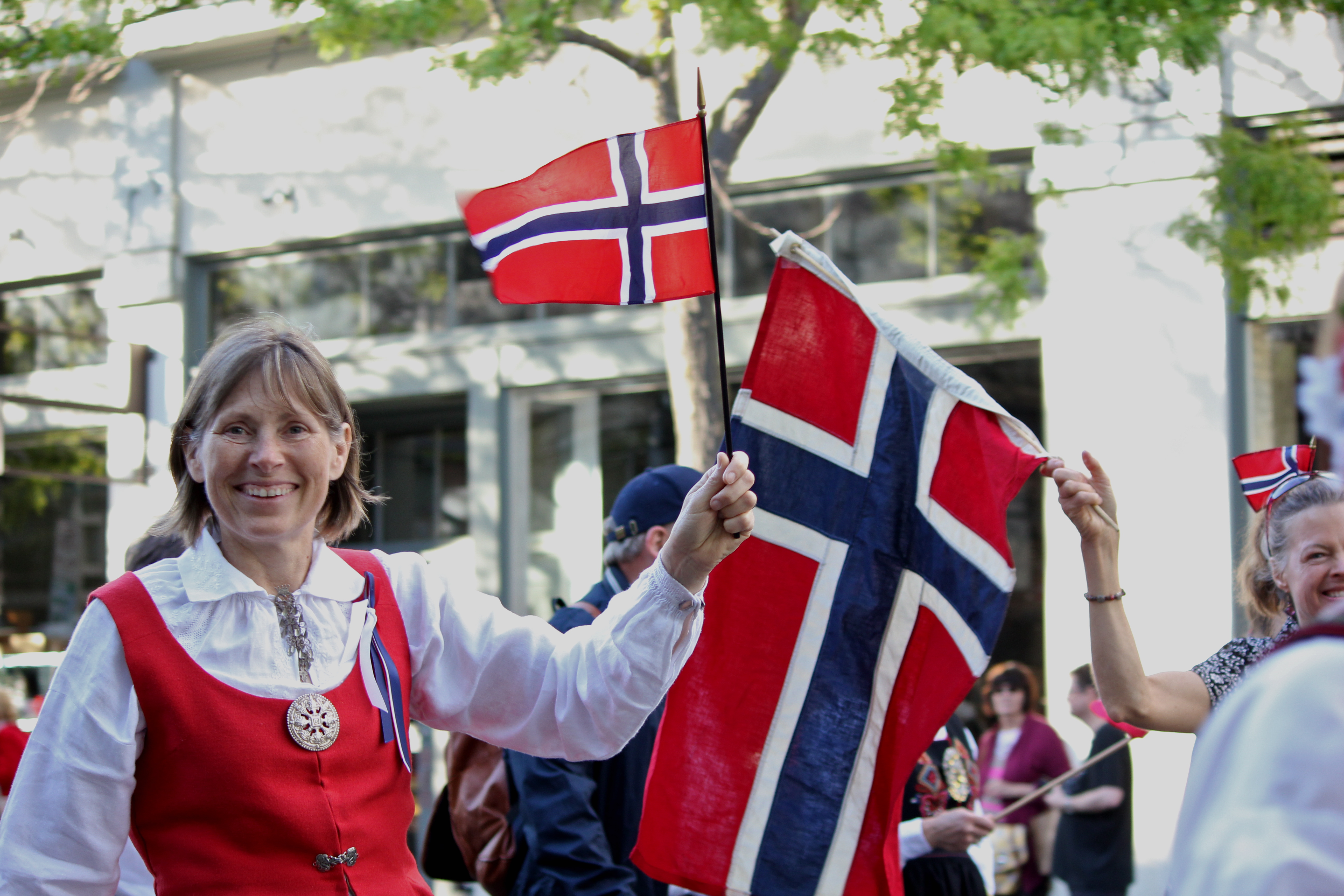
We fell into step and did our best to keep the banner straight and the flag high. Friends called our names from the sidewalks. A college roommate I hadn’t seen in years appeared before me, beautiful in her bunad. What a thrill!

And what an honor for the searvi to participate this year with a Sámi grand marshal leading the parade. I was glad our fickle Seattle weather was smiling on Bård and Bennie. As we turned the corner onto Market Street, however, it began to sprinkle.

“The foxes are having a wedding!” It was a brief sunshower and afterwards, the light was theatrical, making the flags around us glow.

As we walked past the announcer’s stand, the searvi’s mission statement was announced, loud and clear over the speakers, followed by a brief definition: “the Sámi are the indigenous people of Scandinavia.”

It was a golden moment for Pacific Sámi Searvi and our mission. Next year, there will be more of us, perhaps in gakti. It may take years to get it right, but a celebration of Norwegian’s constitution isn’t complete without including the  amendment ensuring the right to inclusion for all its people.

Check out the beautiful parade photos on the Post-Intelligencer website, and others here and here.
IMG_8983 IMG_8998 IMG_9023 IMG_9033

All photos © 2012-2013 Julie Whitehorn.

A Special Syttende Mai this Friday

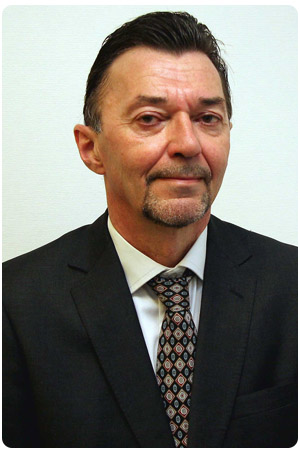
Dr. Berg, Grand MarshalThere will be notable Sámi presence in Seattle’s Syttende Mai parade this Friday, with a Sámi scholar for a Grand Marshal, and first-time-ever participation by Pacific Sámi Searvi, representing Sámi descendants and culture in the Pacific Northwest.

This year’s Grand Marshal is Sámi scholar Bård Berg, who teaches history and philosophy at the University of Tromsø. Berg lived in Seattle for a year while he was a Fulbright scholar at University of Washington’s Department of Scandinavian Studies, doing research on the immigration of Sámi people to the Pacific Northwest.

Syttende Mai is the celebration of Norway’s Constitution, signed May 17, 1814. Norway’s Sámi Act of 1987 provided the legal basis for Sámi participation in the government, and in 1988, Article 110a officially ended assimilation policies, stating, “It is the responsibility of the authorities of the State to create conditions enabling the Sámi people to preserve and develop its language, culture and way of life.” A year later, the first Sámi parliament convened in Norway, and in 1992, Norway passed the Sámi Language Act, making Sámi an official languages counties with large Sámi populations, namely five municipalities in Finnmark County and one municipality in Troms County. An estimated 20,000 Sami in Norway speak Sámi.

Throughout the day there are events to delight adults and children, including a luncheon at Leif Erickson Lodge, fjord horses at the Nordic Heritage Museum (where admission is free all day), and musical acts at Bergen Place. The parade, which starts at 6 pm, draws thousands of observers and includes over 100 marching bands, drill teams, community groups,  and classic cars.

Seattle’s Syttende Mai celebration is the third largest (behind Osoo and Bergen, Norway) and has been celebrated here since 1898, before Washington was even a state.

Check out the official site for more information.

Want to walk with us?  RSVP on Facebook or just look for the Sámi flag during check-in at Adams Elementary (28th and 62nd NW) and introduce yourself. The parade starts at 6 pm.

Think sun, for children of the sun.

PSS Supports Idle No More

SamiSearviIDM

From left to right: Kjirsten Winters, Lynn Gleason, Sara Linde, Ivan Winters, Julie Whitehorn, Maia Whitehorn, Kai Johnson, Renee Timmer, Espen Storfjell, Troy Storfjell. Photo by James Winters.

After a discussion, web poll, and call-out to members, some of us gathered in Tacoma today to show support for Idle No More. Soon after, the photo above was posted on Facebook with our statement:

We, the members of Pacific Sámi Searvi (Sámi Americans in the Pacific Northwest) stand together with our Sámi brothers and sisters in solidarity with the Idle No More movement.

Within three hours, the photo was “liked” over 900 times and shared over 200 times. Wow.

Among the Facebook comments was a not-unexpected question: What is a Sami?

PSS member and PLU Professor Troy Storfjell answered:

“The Sámi are the Indigenous people of northern Norway, Sweden, Finland and the Kola Peninsula of Russia, sometimes referred to as ‘Lapps’ or ‘Laplanders.’ There are 9 Sámi languages. Although reindeer herding is the most well-known Sámi livelihood, fishing, hunting and small-scale farming and sheep-raising are also traditional ways of life. Sámi participated in the co-founding of the World Council of Indigenous Peoples in the 1970s, and participate in a number of global Indigenous forums and organizations today.”

Indigenous and non-indigenous people around the world are uniting to support the goals of Idle No More. The Sámi Parliament issued a statement of support on January 11th, as reported here earlier, joining a river of other voices. Why the surge of international support?

Continue reading

Tolkien and the Secret Story of the Elvish Language

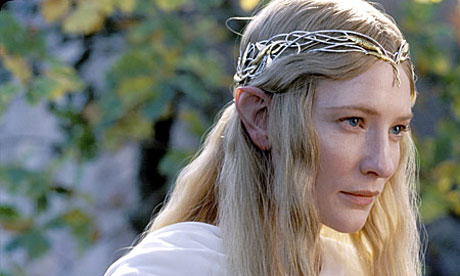
Cate Blanchett, Elf Queen

Many are familiar with Norse myth elements in J.R.R. Tolkien’s “Lord of the Rings” series. “The Hobbit,” the most recent in the film series, is now in theaters, and as with the other LOTR films, features Elvish, a language created by Tolkien, who was an accomplished linguist in addition to being an author.

My friend Kari Turi, who is of Sàmi heritage and happens to speak both Finnish and Welsh, was astounded when, on viewing the films, he understood the Elvish. What a thrill that must have been!

Listen to Elvish being spoken by Tolkien himself and find your name in Elvish here. (Mine is Nienna Carnesîr.)

Have you seen the movies or read the books? Do you know of other Sàmi connections?