Into the Dark Together

Recently, after getting a haircut in Ballard, I crossed the street to chat with a friendly-looking woman in sage linen overalls tending the Nordic Museum’s beds. I asked her about the BBB, the bronze birch borer (Agrilus anxius) which is feasting on Seattle’s birch population, with a specific appetite for the non-native, white-barked varieties.

Damage appears first at the crown, defoliating the limbs. One of the birches near the museum sign looked stricken, and the gardener confirmed it, explaining that crown die back and the “D” shaped exit holes on the trunk are signs that tree is a goner.

I told her about the betula Jaquemonti we planted as a sapling when we bought our house thirty years ago. Now two to three stories tall, it gives us shade, kindling, catkins, compost, and habitat for birds, squirrels, and small humans. So far it appears healthy, but our neighbors’ birches are balding up top.

Drought weakens the trees natural defenses, she said. She didn’t have to mention the hottest temperatures ever recorded on the planet, and what they bode for our future. I recognize climate anxiety when I see it.

Will a future Seattle, once known for our mild climate, become a refugee city? Will drought and infestations leave the city’s tree canopy with brittle snags, lush gardens replaced with Himalayan blackberry vines? Will we see generations of Droplets in the city’s red cedars? Seattle has lost 255 acres of tree canopy in the last five years.

Dark thoughts swirled as I entered the museum, made darker by the news on my iPhone that the Titan’s passengers had been alerted to their imminent death before imploding. WTH? Why was an alarm made to sound when the hull was breached, prompting them to offload weight so they could surface, when such efforts were futile? As I tried to parse the engineers’ logic, the corollary with climate change was impossible to ignore.

When is no alarm the most compassionate?

I checked in at the museum’s reception desk, palmed my ticket, and pushed open double doors to the current installation, titled FLÓÐ (flood).

It was pitch dark. An overhead strobe gave brief glimpses of fog, a dark carpet, velvety walls. Discordant noises emerged from all sides: an industrial crash, freeway roars, whooshing wind and surf.

I blinked, willing my eyes to adjust, and reached for my glasses out of habit, but they were useless. I could not see my hand in front of my face. Inching forward, I became conscious of the clammy hand of fear at my neck.

Nothing to be afraid of, I consoled myself, swiveling to see the EXIT sign, a green glow in the fog. This is not the Hotel California. You can leave anytime you want.

But my body wasn’t having it.

It was trapped in a nightmare from childhood, stuck in a dark place, unable to escape. A therapist once suggested this was my brain processing birth trauma, which seems as likely as anything, but in that room, no doubt inspired by this podcast on epigenetics, I had a new thought. Maybe the nightmare is beneficial, in a sense, something encoded in my RNA by ancestors who had survived dark places. It is meant to alert me to get out while the getting is still good.

Is this from my Sámi ancestor who, for pummeling a Swede in a bar fight, was sentenced to a year in the medieval fortress at Varberg? Was this from my Finnish ancestor who found that the “land of the free” did not prevent mine bosses from sending him into danger ahead of the Swedes and Norwegians? Was it a gift from young Brita, blind in one eye, lying head to foot in steerage for the month-long voyage from Liverpool, her cloak wrapped tight against the fingers of chill winds and strange men?

Now the exit sign now looked like a life raft. As I shuffled toward the door, the strobe illuminated someone else in the room.

“Hi,” I whispered. “I am freaking out in here.”

“Well, sure,” she whispered back. “I still get scared, and I’m a docent.”

The kind docent consented to us holding hands and navigating the exhibit together. A problem shared is problem halved and a nightmare vanquished. When we emerged at last into the lighted hallway, we thanked one another, and spent a few minutes admiring the whimsical illustrations of The Whale Child that line the west wall. In a previous life, the docent was a children’s librarian, and she is very fond of this book by local authors.

It occurred to me that The Whale Child provides an answer to FLÓÐ.

“We are utterly screwed,” FLÓÐ seems to say. (Obviously, mileage varies.)

“We are all one in this great mystery,” says The Whale Child.

It’s an inspired pairing.

I wandered off to check on some permanent exhibits that are remarkable for what they do not say.

The first is a replica of a lappstrake / clinker–built boat, the second a mural of reindeer by a Swedish artist, and the third, a courtyard labyrinth by an Irish-American sculptor. You would never know it from the signage, but all three, lappstrake, reindeer, and labyrinth, have powerful symbolic and historical associations with the Sámi. Why nothing in the signage?

Is this a case of ye olde colonial erasure, or something else. Have the Sámi been ringing the alarm of climate change for so long that silence is considered a tender mercy? No, I thought, that can’t be. The museum has more Sámi programming than ever, and a new exhibit coming next month.

Go see FLÓÐ if you can (the exhibit is extended to August 6).

Try to find a hand to hold. We are in this together, whatever this is.
To Woman

I am thrilled that Eadnán Bákti (To Woman) has dropped from Mari Boine’s new album Amame, a collaboration with the fantastic Norwegian jazz pianist Bugge Wusselhoft. There is alchemy between the two: her exploratory, expressive, tremulous vocals weave through his tender lyricism like a light embrace. Like a silk shawl around your shoulders, or lakewater warm from a month of midnight sun.

While it isn’t necessary to understand them to enjoy the song, the Sámi lyrics by poet Kerttu Vuolab are both lamentation and tribute: they speak to the experiences of women under patriarchy and to the enduring, divine feminine that abides within and around all of us. The album’s lyrics in English are my small contribution to the album. Rarely a direct translation, I hope they are suggestive, like that Zen saying: “Not the moon, but a finger pointing to the moon.

Here is where you can pre-order Amame, which will be released on September 29, 2023. Not sure it matters, but I receive no financial benefit from your purchase. In fact, I have something to give away.

Ticket Give-Away

Because of a foot injury, I am unable to jump the pond and join Mari and Wardruna for Nordic Night at the Borgholm Castle on July 8th. It will be their first performance together since they brought down the stars (and a full moon) at Red Rocks in October of 2019. This show promises to be just as epic.

I have two tickets to give away. Send me a message pronto if you can use one or both. (And tell me how you will share your experience. Cuz it’s relationships, relationships, all the way down!)

Eadnán Bákti / To Woman

Original lyrics by Kerttu Vuolab
Music by Mari Boine
English lyrics translation by Julie Whitehorn

Like a mountain

Like the ocean

Like the heavens, you are

Just as majestic

As mobile and light

They held you down for a long time

And kept you silent

But life itself is on your side

Helps you rise

Like a flower, you are

Our mother’s tongue echoes in me

As your words

Bringing understanding

They sing in me

You are no prisoner

Nobody’s servant

You are not lesser than 

You, too, deserve consolation

When so much is demanded of you

They still gaslight you

Because they know your honesty

Their crimes to hide

With lies

You are grandmother

Mother

Sister

Woman

They fear you, for they know

You have life on your side

Fly like the bird you are

Trust you are a flower

Truth & Reconciliation in Norway

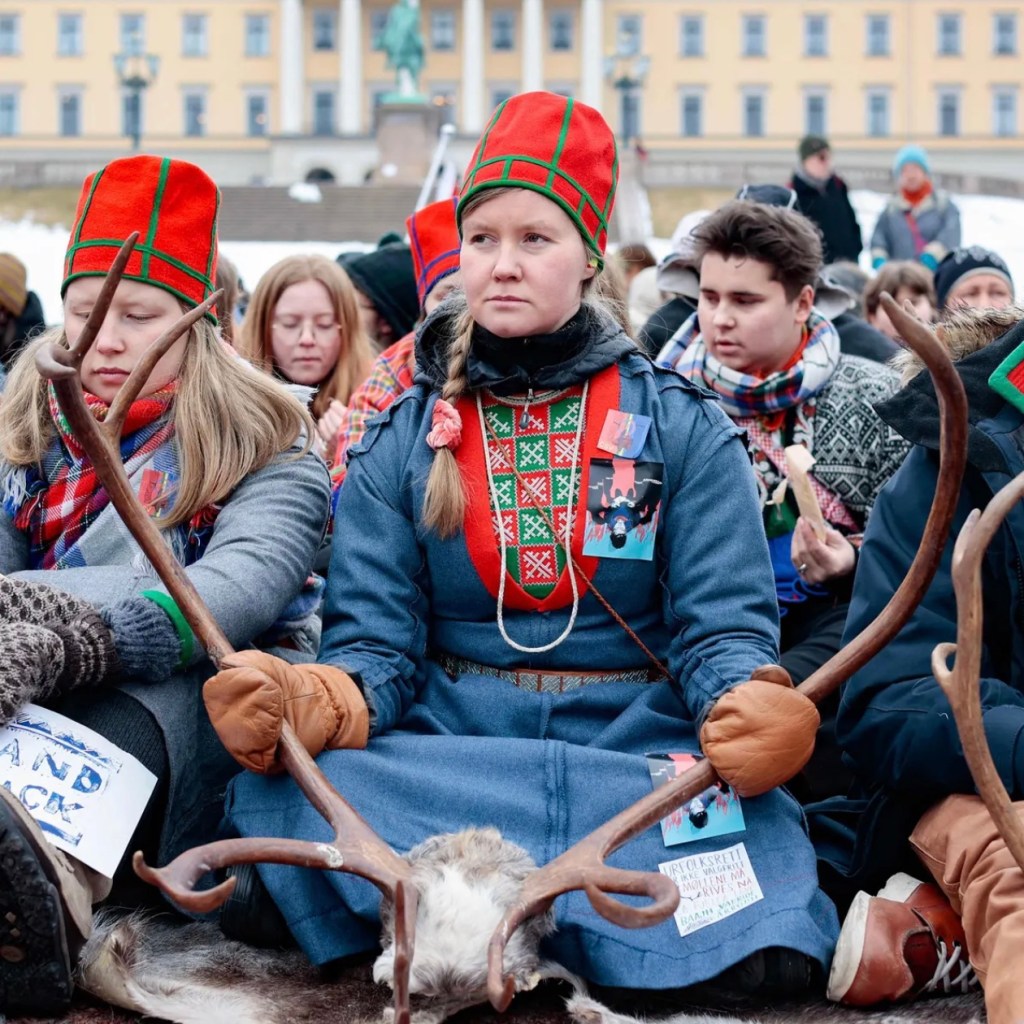
Members of the Sámi community protesting against the building of wind turbines on land traditionally used to herd reindeer in Oslo, Norway, in March. Photograph: Alf Simensen/NTB/AFP/Getty Images

Friends in Norway are posting on Facebook about the final report of the Truth & Reconciliation Commission released today. The report is the culmination of five years of work by a commission of 12 professionals (I am proud to claim one as a relative, whom I met by chance in Sortland last summer). Their mandate was to document Norwegianization policies and injustices towards Sámi, Kven and other ethnic groups, and to propose measures for further reconciliation. More than 760 people provided testimonials.

Dagfinn Hoybraten, head of the commission, acknowledged that some outside observers may question the need for such a commission in a “welfare society characterised by peace and democracy”.

“The truth is that also Norway doesn’t have a history to be proud of when it comes to the treatment of our minorities.”

The live reading of the report (broadcast from the National Theatre) is no doubt evoking anger, grief, validation, and skepticism among many Norwegians.

On the positive side, there are no calls to ban the reading, to deplatform the Commission, or to enact laws that prohibit the teaching of this difficult history, lest it make majority kids feel “uncomfortable.”

But reconciliation is remote until Fosen is fixed.

In 2021, Norway’s Supreme Court ruled that the windfarms at Fosen, opposed by the Sami, were improperly permitted and constitute a violation of human rights. Earlier this year, after protests in Oslo shut down ministries and drew international solidarity, government officials apologized, admitted the violations, and promised swift action on the Fosen.

Yet those windmills keep on turnin’.

Saturday, June 3rd marks 600 days since the court ruling.

Sámi and allies are gathering now in Oslo, meeting the state’s empty words with their concrete action.

I wish them courage and endurance.

(Follow the group Natur og Ungdom on Instagram or Facebook for updates.)

August in Sámerica

At 01:19, you can hear Sandra Ericksen Eira joiked by Hans Ole Eira, Sámi Grand Prix winner (introduced by singer and actor Mikkel Gaup)

The uptick in Covid cases in Washington state means most of us are back to donning masks indoors, avoiding crowds, and washing our hands extra long. Just when we were getting out and about! It doesn’t have to be this way. Please persuade your friends and relatives to consult their doctors about vaccines, not social media, and then boost their immunity (and yours) by thanking them and staying in touch. Community boosts immunity!

Our ancestors lost so many of their loved ones to smallpox, pertussis, cholera, tuberculosis, influenza, you name it. I made a list based on death records for my own family and it was hearbreaking. So many children! Let’s do all we can to protect our most vulnerable.

Some of the events are online only. Follow Seattle Sámi on Facebook for the most current info.

August Events

6 pm, Wednesday, August 4, 2021

Sámi Parliament Member Sandra Andersen Eira, Leif Erickson Lodge, Ballard

Sandra will help install the lodge’s Sámi flag, talk about her role in the Sámidiggi, work as a sea captain, and whatever else she would like to share. There will be time for Q&A (maybe we can persuade her to tell how her home town inspired the film Ofelaš/Pathfinder.) A relief to some of you, we will NOT be singing the anthem together (thanks, Covid). We will listen instead. But, there will be cake! Free. In person only. No need to register. Questions? Email JoAn Rudo at the Lodge.

6 pm, Friday, August 13, 2021

Sámi Dreams, Photo Exhibit Reception, Nordia House, Portland

The exhibit is excellent, and no doubt the talk by photographer Randall Hyman & curator Max Stevenson will be fascinating. Hyman has been around the world as a Nat Geo photog. That said, it’s unfortunate the only Sámi included are two dimensional. We can all help our Nordic institutions adhere to the principle of “nothing about us without us” by flexing our memberships. (Join up to speak up!) Free. Online (registration required) and in person.

2:30 pm, Tuesday, August 17, 2021

A Night of Poetry From Fulbright Poets to Romania, Burkina Faso, and Finland

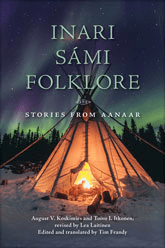
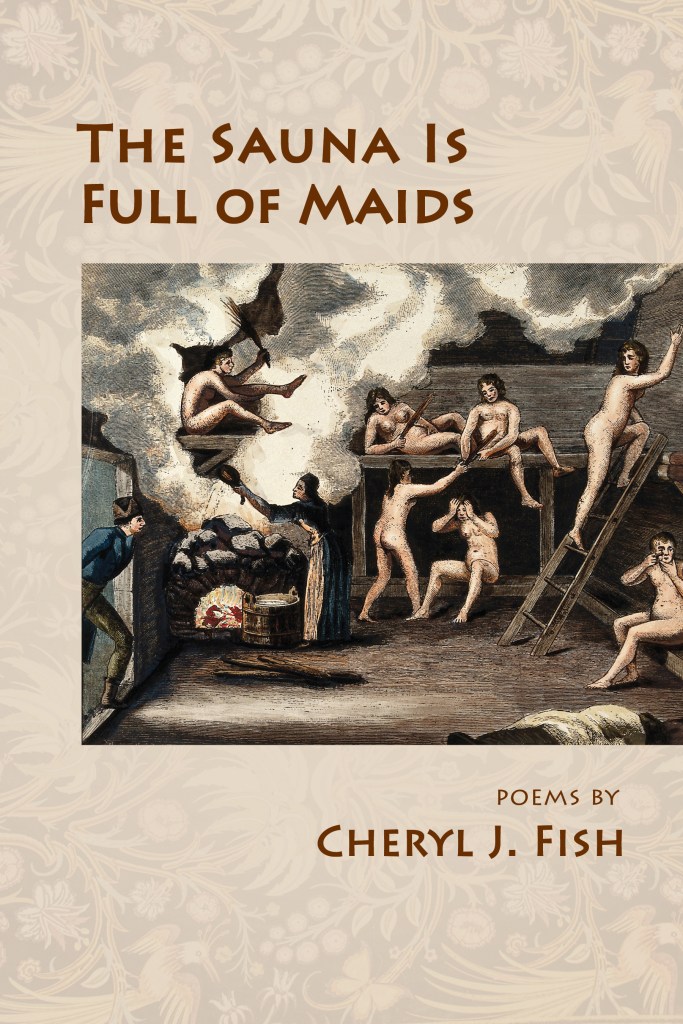
Two friends active in the Sámerican community are among the Fulbright poets sharing their work. Both did their Fulbrights in Finland, and both are extraordinarily talented. Tim Frandy is also the father of a charming toddler, professor of folklore, and translator of Inari Sámi Folklore, the first polyvocal anthology of Sámi oral tradition ever published in English. Cheryl Fish is professor of English, an essayist (from whose work about Sámi artistic response to resource extraction I learned the term “elegiac ecojustice”) and poet whose recent book, The Sauna is Full of Maids, romps through Finnish sauna culture and friendship. Free. Online only (register at link).

Do you want to share an event? Feel free to contact me here.

Only connect

Kalix River (svensk: Kalix älv, meänkieli: Kainhuunväylä; davvisámigiella: Gáláseatnu), July, 2016

“We steal from out descendants because we’ve forgotten our ancestors” is increasingly heard in discussions of climate collapse and adaptation. The myth of the bootstrapping, solitary individual has been a destructive one.

Five years ago, my dream of walking in my ancestors’ footsteps came true when my cousin Jeanette and I travelled through Sápmi. This video was taken around midnight, in my grandfather’s home village of Tärendö. (“Tear-in-two,” Mom called it. What I thought was Freudian for heartbreak turned out to be close to the local Meänkieli dialect.)

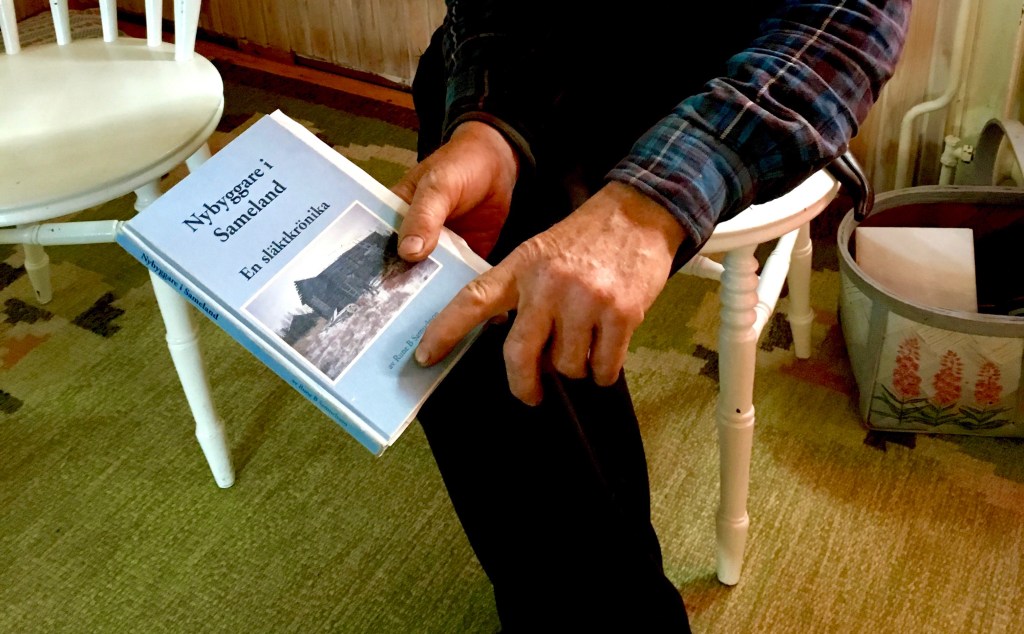
Grandpa was the last of his family to leave in 1903, so we didn’t expect to find any relatives in Tärendö. All ties to America came from other villages, where the family scattered long ago, so we were surprised when our hosts, Inge and Lasse (referred by a mutual friend) not only recognized our family surnames but shared a few of them.

Inge said, Heinonen? We are related, then!

Lasse drew a chart that showed how our great-grandfathers were cousins. Both men had changed their Sámi surnames to Swedish, hoping, perhaps, to keep old traumas from our shading our futures. (If only!)

Lasse gave me some papers from the Swedish government granting him permission to herd reindeer and own his earmark. When I tried to give them back, he said no, you take them. I’ve thought a lot about those papers, and the rights by which the state assumed its authority, and Lasse’s wry smile. So much to unpack.

Lasse’s book with our ancestors’ names. July, 2016

But I want to tell you about this bridge. When it was under construction in 1938, they began by installing the arches. Before the roadway was laid down, an old lady from the village decided to cross. She was seen climbing up one of the arches, her tiny form doubled over, making progress one step after another. She clambered all the way up and over, and down the other side.

Maybe she was eager to see a friend on the other side?

“Now the kids do it for fun,” said Inge. Or maybe it was Lasse who told that story.

And maybe my leg was being pulled, in true Sámi fashion. But I prefer to think that the story is true, that the old lady was a relative — and that I inherited her pluck.

“Traveler, there is no path, but what you make by walking.”

“Only connect.”

Bridge over the Kalix, July 2016

Linneaus, Punk’d

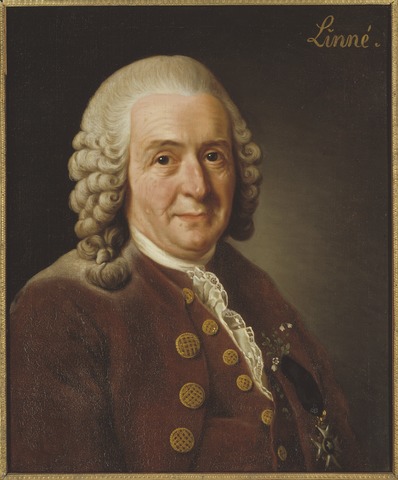
Carl von Linné, 1707-1778 by Roslin Alexander

I am inclined to believe that Linneaus was made fun of . . .

It is a well known fact that informants might get tired of the anthropologist’s endless and sometimes in their eyes nonsensical, questions. They then can tell the unhappy researcher what comes to their mind to satisfy him and to amuse themselves. I am inclined to believe that Linnaeus, too, was made fun of, without him being aware of it. After having been in Tjåmotis on his way back to Luleå, he describes, among many other things, the way the Sami kill a reindeer. He then mentions all the useful slaughter products the animal supplies them with. In the end we read: “Everyone throws the testicles away. The penis serves to make a thong to draw the sledges.

Though no comment is given on this, either in the general text commentaries or in the ethnological commentary on Linnaeus’ diary published in 2003, I have my suspicions that Linnaeus here was fooled. Although he told Roberg that he had travelled by sledge, no traces of it are found in the diary. The harness for drawing sledges he saw himself and described, when he was in Lycksele, had a leather thong. Motraye, who did travel by sledge and describes both sledge and harness, never mentions such a thing, talking only about “a trace”/”un trait”. From a publication of Knud Leem from 1767 we know that this thong was made of a strap of cow skin or seal skin, well greased to make it supple.

Nellejet Zorgdrager in Linnaeus as Ethnographer of Sami Culture, TijdSchrift voor Skandinavistiek vol. 29 (2008)

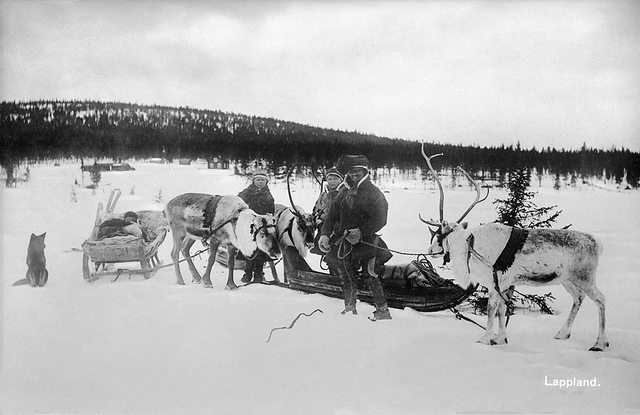
Jukkasjärvi Sámi family with sledge and reindeer, photo by unknown, Almquist & Cöster postcard 1949. Swedish Heritage Board. Public Domain

Sámi Dreams

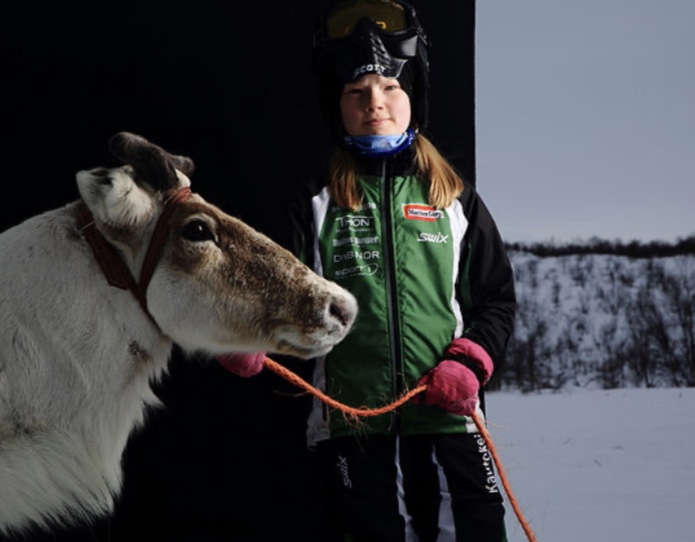
Photo by Randall Hyman of Ana Maria Eira and her reindeer

If you live in or near Portland, Oregon, don’t miss Randall Hyman’s “talking” photo exhibit called Sámi Dreams, September through November, 2021 at the Nordia House, 8800 SW Oleson Road.

This stunning collection of portraits and interviews includes audio by the portrait subjects. It’s as if they are in the same room with you. The photographer and curator Randall Hyman is an accomplished observer of the Arctic, with four decades covering natural history and travel topics for Smithsonian, National Geographic, Discover, American History, The Atlantic, Science, Wildlife Conservation, et al.

As a 2013 Fulbright Scholar in Norway and guest of the Norwegian Polar Institute, Hyman covered field science, resource development and climate change in the Arctic for a number of organizations and publications. In 2015, he was the distinguished Josephine Patterson Albright Fellow of the Alicia Patterson Foundation, expanding on his coverage of Arctic climate change. He continues to focus on Arctic topics and lecture on polar climate change across the United States and Europe.

The exhibit was most recently in Minneapolis. I hope our National Nordic Museum will consider hosting it next; it deserves a wide audience.

Bearaš, family

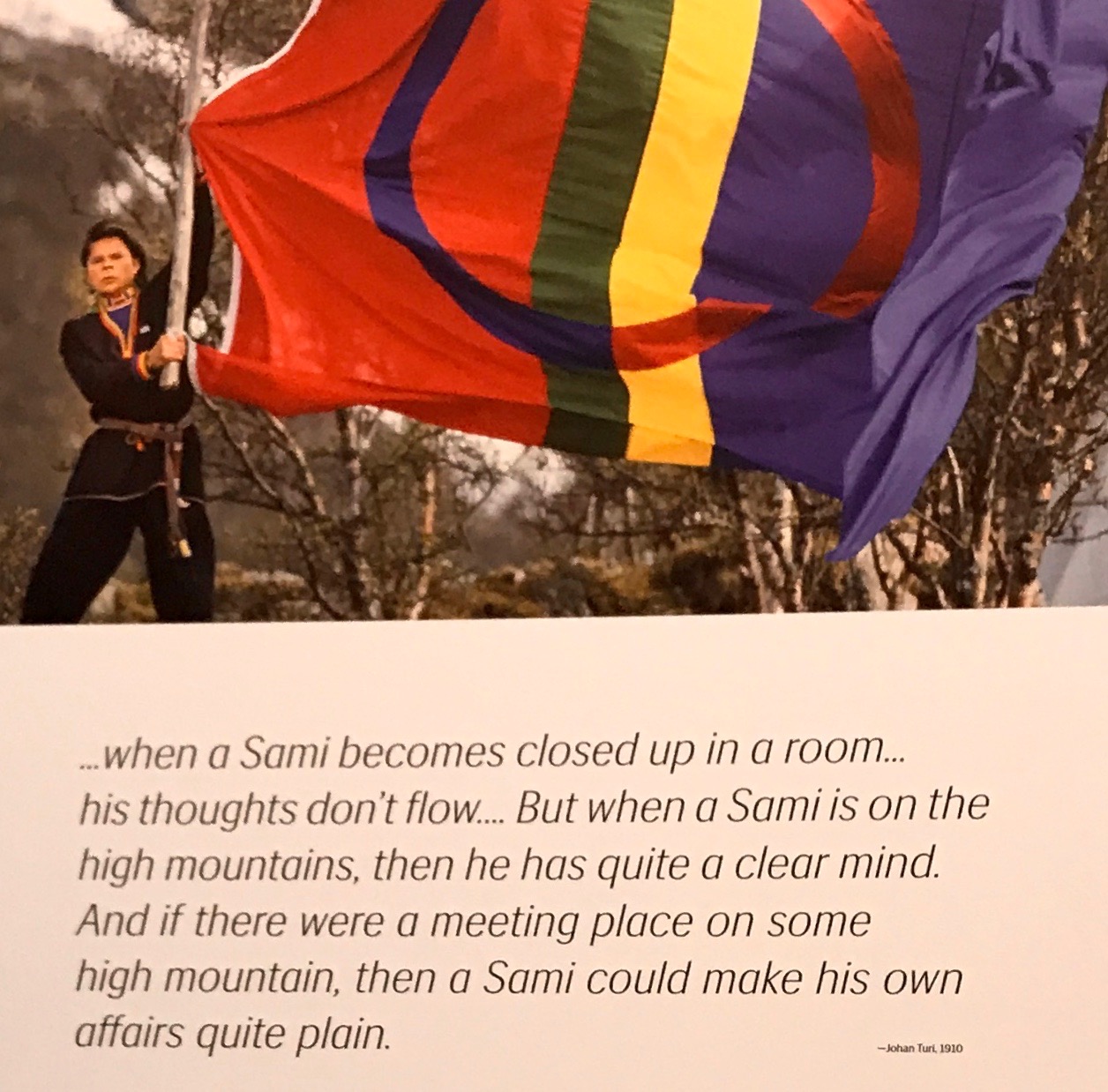
In 2019, following a wonderful reception to my “roots talk” (and singing of the Sámi Sova Lavlla) at the Leif Erickson Lodge, the Board of Directors voted unanimously to install a Sámi flag in the hall. To my knowledge this Sons of Norway Lodge is the third Nordic institution in Seattle to display our flag, after the Swedish Club, which has flown one above their portico for many years, and the National Nordic Museum, which includes several in its displays, such as the one below.

If all goes according to plan, a Sámi flag will be installed when Sandra Eira speaks at the Leif Erickson on August 4, 2021.

Display at National Nordic Museum, Seattle

If the walls could speak, I might ask them about my relative Anna Moen from Narvik, Norway. According to relatives, Anna was one of the lodge’s first female members (it opened to men in 1903 and to women in 1927). A Ballard resident, she was also a member of the Daughters of Norway and Nordlandslaget Nordlyset, whose archives are now at Pacific Lutheran University. (Perhaps a student would be interested in searching them for Sámi references.)

Below is a poem I wrote about Anna for last year’s POPO project, using an entirely optional formula of starting each new poem with the last line of one received.

Making a new home,
Anna from Narvik
never knew her áhkku’s
birthname or the kin
left behind in Sweden
Erasure being the point.
So two blood cousins
crossing Market Street
In 1947, could spy
the replica of a smile.
Become suddenly bereft.
Rootless Anna,
Orphan Clara!
Allow me to stop you
On this Duwamish deerpath
and join your tiny hands
Meet, dear foremothers
This is our birthright:
Bearaš, family.

If you like to write and receive short poems (and support the USPS) sign up for this year’s project.