Mu Eadni / Mother of Mine

It’s a scary time. 

International law? Unenforceable. Convicted felon for president? Probable. Rollback of women’s rights? Happening.

As fascism bares its teeth, we must not take for granted the freedoms we’ve gained. They can be lost in one election. 

Those are my thoughts as I listen on repeat to this beautiful song by Mari Boine. I feel my heart slow. It is good medicine for those of us with a mother wound, recent or ancient, which is, I suppose, all of us.

In the introduction (below), Mari explains that her mother was a Laestadian Christian. For those yet unfamiliar, the faith is named for its 19th century Swedish Sámi founder, Lars Levi Laestadius, who finally succeeded in Christianizing the Sámi, or so it is said, after hundreds of years of failed missions. But it was not so simple.

Long before “woke” meant “aware of historical oppressions,” Laestadians referred to themselves as “the awakened”: aware of an embodied, transformative experience of the Divine not available through performative religion. Colonial power dynamics remained, however, shifting from male priests to male lay preachers, while principles like simplicity and moderation hardened into performative taboos. My own Laestadian mother, who died in 2021, never wore makeup or jewelry (other than a wedding band), never had her hair cut or styled, never saw a film, concert, or ball game, never played an instrument, never tasted wine, never heard a woman preach, never had her own bank account. Married at 17, she had nine children, and when her daughters chose different paths, she was profoundly hurt. I l often wished that I could free her, like a bird from a cage, and I suspect she felt the same about her mom, whose life was even more restricted.

Would Mari’s mom have attended her concerts had she been able to do so in disguise, without her Laestadian community punishing her for it?

Perhaps, in a way, she is at every performance, as transported as the rest of the audience, free to be carried away by beauty. It’s a lovely thought, and while I’m at it, I’ll place my mom, her distant relative, alongside, smiling and swaying.

Bravi tutti, Mari Boine and band, Knut Bry for the videography, Vojta Drnek for the editing, and Outi Pieski for the amazing art. Great work. (I am chuffed that my translation is captioned.)

Introduction

Mu eadni / Mother of Mine is a song of love and lament for the woman who gave me life, and for all women who suffer under systems that shame and subordinate them. As a Laestadian Christian, my eadni was bound by strict gender roles, and that insidious association of the feminine with sin. She was taught to be self-denying: that her highest purpose as a woman was obedience. (To males, naturally, all the way down.)

When her daughters resisted, she felt it was a personal failure. And yet, she was Sáami, with echoes and stirrings from a much older worldview, one that celebrated the feminine, that found purpose in reciprocity, not hierarchies. Sometimes, I feel her with us, free from shame, sharing our freedom. Smoothing our fringe. Adjusting our belts. Asking us to twirl.

Mari Boine

Mu Eadni 

You were not permitted to preen

Not for you the silken liidni

Nor were you allowed to dream

Of glamour, or vainglorious gákti

Feminine desire you had to condemn 

You could not defend even your own daughters

For pleasures of the flesh

Could open the soul to sin

O mother of mine, mother of mine

If I could draw you close again

I would swathe you in silk and pearls

Ribbon you in silver and gold 

Adorn you and adore you

So we three daughters, free

Could recall you to unshamed joy

You were not permitted to preen

For pleasures of the flesh

Could open the soul to sin

My mother, O my mother

Our mother, O our mother


Juoiggas, Stolen, Interbeing

If you’re in Seattle this weekend, don’t miss the Beaivváš Sámi National Theatre performing Juoiggas at the National Nordic Museum on Friday, April 11 and again on Saturday, April 12. The performances are free, but you will want to reserve your seats. (Their Minneapolis gig sold out!).

This Friday is also the much-anticipated release of Stolen, the first Netflix adaptation of a Sámi production. Based on Ann-Helén Laestadius’s novel, the film is directed by Elle Márjá Eira, features Sámi actors and crew, and was filmed near Vittangi not far from my ancestral area. Can hardly wait.

It’s a light in the dark.

With the continuing horror of state-sponsored genocide, the potential for Trump’s return to power, and the roll back of reproductive rights (today Arizona revived a 160-year old law against abortion with no exceptions for rape or incest), I find myself drawn to outdoor walks for solace. In our local cemetery, every tombstone is a memento mori (all is temporary) and an invitation to take the long view. On Wednesday, instead of entering the grounds, I made a loop around them, listening to a fascinating podcast (The Rest is History) about Martin Luther, and making a mental note to explore the parallels between peasant and Indigenous revolts. Did Laestadius like Luther, dial back his support for reform when his salary was at stake?

Near Fulton Street, I was stopped in my tracks by a bald eagle, high in a tree. I removed my earbuds to see more clearly, as one does, and zoomed in with my cell. Wow.

What a day to be alive. The sun was gilding the magnificent elms that meet over Fulton Street. Their kinetic branches, still bare of leaves, evoked a giant lung, and also, Indra’s net. It amused to think of the eagle’s nest, a jumble of sticks and moss, as a “perfect jewel” reflecting an infinite number of other nests.

Perched above its nest, the eagle (a male, I would learn) was nearly motionless, occasionally looking left or right, then returning his beak to the shade. Avoiding sunburn, or detection by crows? Crows love to mob raptors. The wind ruffled his white tailfeathers.

I willed him to take flight but he didn’t seem to be going anywhere, so I put Goaskinviellja on speakerphone, and we listened together. As Mari evoked an eagle asking Čatne du soajáid nie čavgadit? Who bound your wings so tight? he bent his head and seemed to look directly at me.

Yeah, okay. Working on that.

After taking a ridiculous number of photos, I bid him goodbye and made a circuit of the hill, pausing at viewpoints to admire the clouds. At Kerry Park, the Space Needle looked like it had taken up smoking. So white, so bright, those clouds. Did you know clouds in the Northern hemisphere are more reflective than those in the Southern hemisphere? Not for a good reason, either.

A red car puttered past under its own white cloud: a Samoyed in the sunroof, ears like Batman.

Back home, I realized that one of my earbuds was missing. How stupid of me. Instead of putting them back in their case, I’d slipped them in my pocket and one had slipped out. As I cursed my absent-mindedness, a small voice inside asked, what if it’s a feature, not a bug? What if your tendency to lose things is related to your capacity for awe?

Oh, right. Here’s to challenging those old paradigms of mental health.

I often describe my childhood as a bell jar, isolated in the woods, deprived by Laestadian dogma of “worldly” playmates and amusements, of television, radio, concerts, sports, movies, museums, theater, Disneyland, Christmas trees, etc. What I got in spades, however, was nature. Years of intimate conversations with the weather, trees, rocks, dogs, cats, cows, and ducks in the pond, which may have inoculated me against species loneliness.

Species loneliness is a symptom of the disease of human exceptionalism. Thinking that we are alone, we cannot turn to other species for comfort, nor benefit from their counsel and compassion. In some deep-seated place, we also carry a shadow of shame for how we treat our relatives. Imagine what it would be like to live in a world where we stood tall in receiving the respect and gratitude of other species.

Robin Wall Kimmerer

When I visited the aerie several days later, there were no eagles to be seen, but tucked in a Ziplock on a telephone pole nearby was my lost earpod.

Had it been stepped on, or pecked at? I decided it had been plucked from the grass and placed their by my feathered friend. Right at eye level, next to a QR code directing me to better photos.

Thanks, brother!

August in Sámerica

At 01:19, you can hear Sandra Ericksen Eira joiked by Hans Ole Eira, Sámi Grand Prix winner (introduced by singer and actor Mikkel Gaup)

The uptick in Covid cases in Washington state means most of us are back to donning masks indoors, avoiding crowds, and washing our hands extra long. Just when we were getting out and about! It doesn’t have to be this way. Please persuade your friends and relatives to consult their doctors about vaccines, not social media, and then boost their immunity (and yours) by thanking them and staying in touch. Community boosts immunity!

Our ancestors lost so many of their loved ones to smallpox, pertussis, cholera, tuberculosis, influenza, you name it. I made a list based on death records for my own family and it was hearbreaking. So many children! Let’s do all we can to protect our most vulnerable.

Some of the events are online only. Follow Seattle Sámi on Facebook for the most current info.

August Events

6 pm, Wednesday, August 4, 2021

Sámi Parliament Member Sandra Andersen Eira, Leif Erickson Lodge, Ballard

Sandra will help install the lodge’s Sámi flag, talk about her role in the Sámidiggi, work as a sea captain, and whatever else she would like to share. There will be time for Q&A (maybe we can persuade her to tell how her home town inspired the film Ofelaš/Pathfinder.) A relief to some of you, we will NOT be singing the anthem together (thanks, Covid). We will listen instead. But, there will be cake! Free. In person only. No need to register. Questions? Email JoAn Rudo at the Lodge.

6 pm, Friday, August 13, 2021

Sámi Dreams, Photo Exhibit Reception, Nordia House, Portland

The exhibit is excellent, and no doubt the talk by photographer Randall Hyman & curator Max Stevenson will be fascinating. Hyman has been around the world as a Nat Geo photog. That said, it’s unfortunate the only Sámi included are two dimensional. We can all help our Nordic institutions adhere to the principle of “nothing about us without us” by flexing our memberships. (Join up to speak up!) Free. Online (registration required) and in person.

2:30 pm, Tuesday, August 17, 2021

A Night of Poetry From Fulbright Poets to Romania, Burkina Faso, and Finland

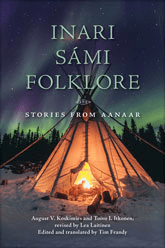
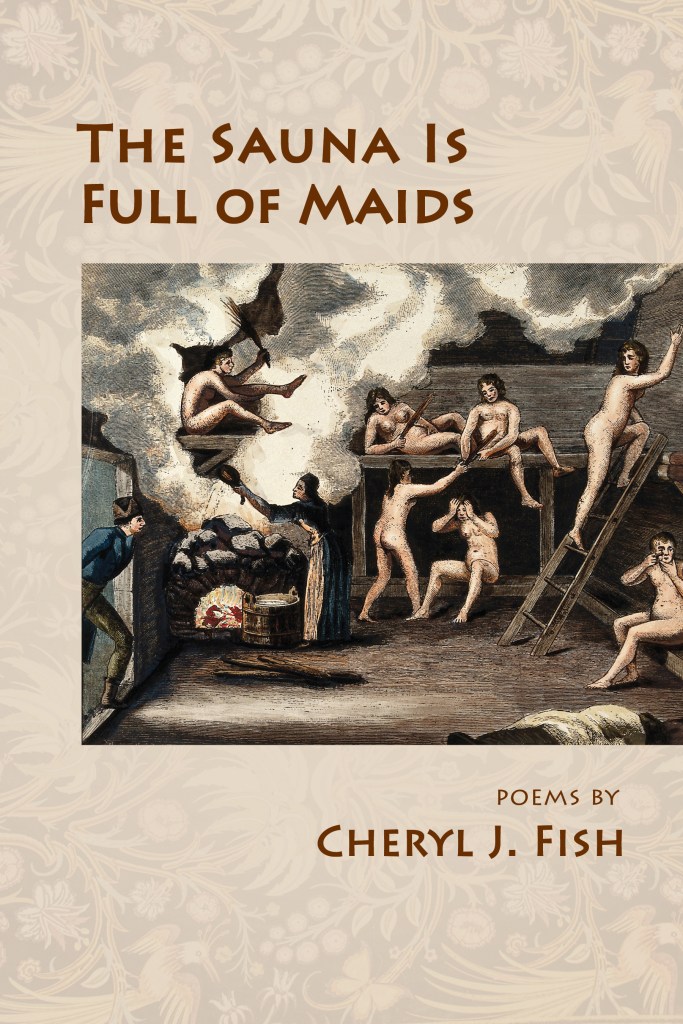
Two friends active in the Sámerican community are among the Fulbright poets sharing their work. Both did their Fulbrights in Finland, and both are extraordinarily talented. Tim Frandy is also the father of a charming toddler, professor of folklore, and translator of Inari Sámi Folklore, the first polyvocal anthology of Sámi oral tradition ever published in English. Cheryl Fish is professor of English, an essayist (from whose work about Sámi artistic response to resource extraction I learned the term “elegiac ecojustice”) and poet whose recent book, The Sauna is Full of Maids, romps through Finnish sauna culture and friendship. Free. Online only (register at link).

Do you want to share an event? Feel free to contact me here.

Celebrate Sámi Day

Celebrated every February 6 since 1993, Sámi National Day (Sámi Álbmotbeaivi) commemorates the first international, pan-Sámi organizational meeting held in Trondheim in 1917, considered the beginning of the Sámi rights movement.

It will be celebrated locally from 4 pm to 8 pm this coming Thursday at Pacific Lutheran University’s Scandinavian Cultural Center in Tacoma. (See link for directions.)

Sámi National Day (Sámi Álbmotbeaivi)
Thursday, February 6, 2014

Scandinavian Cultural Center, PLU, Tacoma

4 pm Opening and Anthem
4:30 pm Exhibit Tour
5 pm Concert by Risten Anine Gaup
6:15 pm Sámi Documentaries

The celebration will open with welcoming remarks and the singing of the Sámi national anthem, followed by a guided tour of the new Sámi exhibit and time for refreshments and socializing. The talented Sámi joiker Risten Anine Gaup (above) will perform around 5 p.m. Two short documentaries will be screened beginning around 6:15 pm, followed by a short discussion.

Props to PLU professor Troy Storfjell and the Scandinavian Cultural Center for arranging the celebration. I plan to be there and hope it is well-attended!

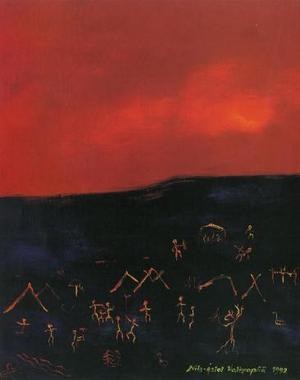
Here is a taste of Sámi music and art for those unable to attend. For many outside Scandinavia, their first time hearing joik, the long suppressed folk music of the Sami, was when Nils-Aslak Valkeapää (1943-2001) performed at the 1994 Lilyhammer Olympics. His friend the Sámi scholar Harald Gaski said “it is in the totality of his expression that you understand Nils-Aslak best.” Listen to his haunting joik from “The Sun, My Father” here as you contemplate the paintings below.

In describing Valkeapää’s poetry (the man was a creative force!), Gaski mentions parallels to Chief Seattle’s apocryphal but famous speech of 1854 in which he asks rhetorically: “How can you sell or buy the air? If we do not own its freshness and the glimmer in the water, how then can the White man buy it from us?”

It’s a question that haunts, given the continued ravaging of resources in the name of profit, in Sapmi and everywhere. But there is hope. The indigenous worldview or cosmology that prioritizes beauty, balance, and harmony over individualism, competition, and materialism never went away and still offers a future on this planet. I love the abstract tension in these two paintings by Valkeapää and the way they suggest both the power of nature and lightness in which the people and animals appear on the land.

Lihkku Sámi Álbmotbeivviin (Happy Sámi National Day!), wherever you find yourself.