Inka, August, Joonas

Recently, while researching a relative’s name online, this lovely 1926 film popped up: Med ackja och ren i Inka Läntas vinterland (With Reindeer and Sled in Inka Länta’s Winterland).

The course of events revolves around the young Sámi girl Inka Länta in her environment. The the arrival of Laestadian pastor August Lundberg stirs up emotions when his moral preaching goes too far.

A/V Club

(This version is only half as long as the original; let me know if you find a longer cut.)

Curiously, the relative I was researching, Joonas Purnu (1829-1902), was not in the film. But AI knows things, so I cast a wider net.

Bingo.

August Lundberg (1863-1930) who plays himself in the film, was rival of Purnu’s. Both men were lay preachers and became the godfathers of the two main Laestadian factions, Eastern (Lundberg) and Western (Purnu)—in a schism that launched many schisms, most recently in Wolf Lake, Minnesota. (The split that keeps on splitting.)
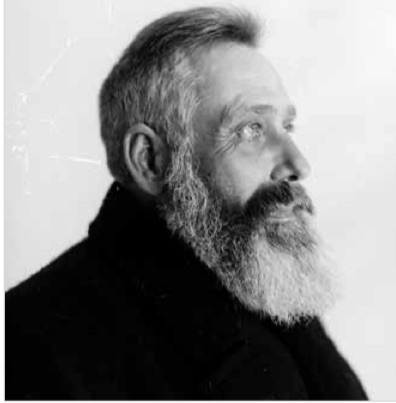
August Lundberg (1863-1930) by Borg Mesch

Tremors of the impending schism compelled Joonas Purnu to visit the USA in 1893, to calm the waters among Laestadian immigrants. This was also the year my morfars far Erik left Tärendö for America. At some point he visited the harness shop of his daughter Lina and her husband Oskar Walsten in Henry, South Dakota.

On left, Lina Walsten and her dad, Erik Wilhelm Lindberg, Henry, SD 1890s

Did Erik and Joonas travel together? They were relatives after all (not via Purnu from Sjokksjokk sameby, though—as Purnu was a farm name for Joonas—but via mutual Heiva ancestors from Siggevaara sameby).

Yet to be discovered.

Both men returned to Sweden.

August Lundberg was a generation younger than they, and Swedish, not Tornedalen with Sámi roots. Born in Dalarna and educated in Uppsala, August came north in 1885 to lead a Sámi mission school in Lanavaara. He married into the Laestadius family, no doubt an important factor in his success as a preacher.

A friend in Finland has copies of letters between Lundberg and my Purnu relative, Syster Mia Carlsson of Kiruna. Translated, they may help me understand the schism that continues to reverberate among descendants.

Economics played a role, e.g., Joonas Purnu forbade his followers to join unions.

To be continued . . .
Only connect

Kalix River (svensk: Kalix älv, meänkieli: Kainhuunväylä; davvisámigiella: Gáláseatnu), July, 2016

“We steal from out descendants because we’ve forgotten our ancestors” is increasingly heard in discussions of climate collapse and adaptation. The myth of the bootstrapping, solitary individual has been a destructive one.

Five years ago, my dream of walking in my ancestors’ footsteps came true when my cousin Jeanette and I travelled through Sápmi. This video was taken around midnight, in my grandfather’s home village of Tärendö. (“Tear-in-two,” Mom called it. What I thought was Freudian for heartbreak turned out to be close to the local Meänkieli dialect.)

Grandpa was the last of his family to leave in 1903, so we didn’t expect to find any relatives in Tärendö. All ties to America came from other villages, where the family scattered long ago, so we were surprised when our hosts, Inge and Lasse (referred by a mutual friend) not only recognized our family surnames but shared a few of them.

Inge said, Heinonen? We are related, then!

Lasse drew a chart that showed how our great-grandfathers were cousins. Both men had changed their Sámi surnames to Swedish, hoping, perhaps, to keep old traumas from our shading our futures. (If only!)

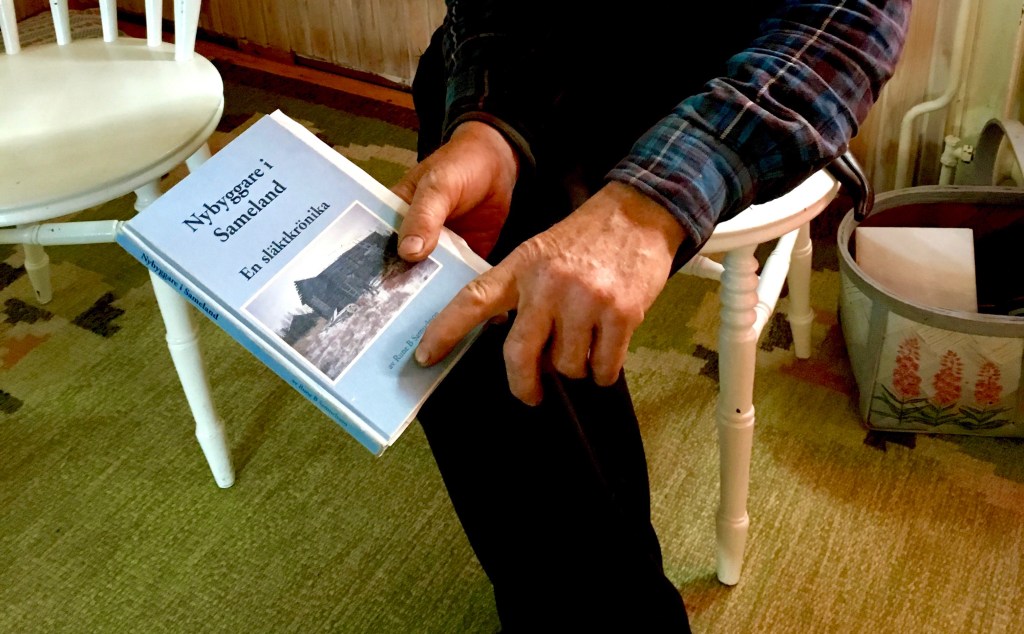
Lasse gave me some papers from the Swedish government granting him permission to herd reindeer and own his earmark. When I tried to give them back, he said no, you take them. I’ve thought a lot about those papers, and the rights by which the state assumed its authority, and Lasse’s wry smile. So much to unpack.

Lasse’s book with our ancestors’ names. July, 2016

But I want to tell you about this bridge. When it was under construction in 1938, they began by installing the arches. Before the roadway was laid down, an old lady from the village decided to cross. She was seen climbing up one of the arches, her tiny form doubled over, making progress one step after another. She clambered all the way up and over, and down the other side.

Maybe she was eager to see a friend on the other side?

“Now the kids do it for fun,” said Inge. Or maybe it was Lasse who told that story.

And maybe my leg was being pulled, in true Sámi fashion. But I prefer to think that the story is true, that the old lady was a relative — and that I inherited her pluck.

“Traveler, there is no path, but what you make by walking.”

“Only connect.”

Bridge over the Kalix, July 2016

Returning to My Roots

This blog has been quiet for a while as I worked on other projects, but it seems like a good time to share what I’ve learned on my roots adventure.

After having my DNA tested and helping to launch Pacific Sámi Searvi, I worked to gather all the information available about my family’s history from FamilyTreeDNA.com, Ancestry.com, MyHeritage.com, geni.com, and other resources, including census records and newspaper archives.

Last April, I shared the fruits of this research with my parents on a visit, but they were not terribly interested. My mother is certain some of the names in my files are incorrect, and she is deeply suspicious of the internet, as well she should be. It is true that there are errors in the online trees, and now some of them are my fault (I am quick to correct them, of course, when brought to my attention).

On that visit to my parents, a cousin stopped in for coffee. I peppered her with questions, but she just laughed and suggested I call her brother. He in turn gave me the phone number of a 91-year old relative living in Oregon. Was I getting the run-around, I wondered. The notorious Scandinavian reserve runs strong in our family.

But “Auntie,” as she asked me to call her, was delighted to receive my call, and invited me over. She was anything but reserved, spry, bright as a tack, and so exuberant in her generosity that we stayed up past 11 pm going through photograph albums. What a treasure trove. I came home with audio (she was happy to be recorded), photographs of her photographs, and colorful stories about her childhood in North Dakota. Her mother Hilda was my grandfather’s little sister, and to my surprise, preceded him in immigrating from Sweden. An elder sister had arrived even earlier, followed by their father Erik and a brother John (the men returned to Sweden).

On the wall of her “plunder room,” Auntie has a large photograph of Erik, my great-grandfather, in an oval frame under not-entirely-transparent glass. I could not stop staring at it. Why did he return to Sweden? What inspired (or required) his daughters to emigrate? What about my grandfather? Continue reading