Inka, August, Joonas

Recently, while researching a relative’s name online, this lovely 1926 film popped up: Med ackja och ren i Inka Läntas vinterland (With Reindeer and Sled in Inka Länta’s Winterland).

The course of events revolves around the young Sámi girl Inka Länta in her environment. The the arrival of Laestadian pastor August Lundberg stirs up emotions when his moral preaching goes too far.

A/V Club

(This version is only half as long as the original; let me know if you find a longer cut.)

Curiously, the relative I was researching, Joonas Purnu (1829-1902), was not in the film. But AI knows things, so I cast a wider net.

Bingo.

August Lundberg (1863-1930) who plays himself in the film, was rival of Purnu’s. Both men were lay preachers and became the godfathers of the two main Laestadian factions, Eastern (Lundberg) and Western (Purnu)—in a schism that launched many schisms, most recently in Wolf Lake, Minnesota. (The split that keeps on splitting.)
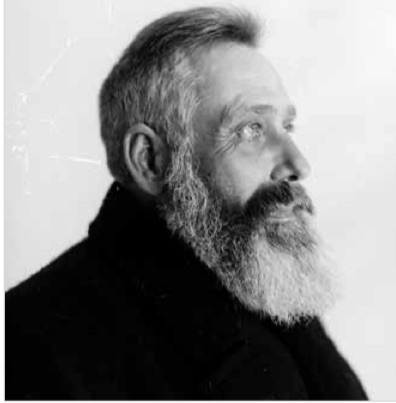
August Lundberg (1863-1930) by Borg Mesch

Tremors of the impending schism compelled Joonas Purnu to visit the USA in 1893, to calm the waters among Laestadian immigrants. This was also the year my morfars far Erik left Tärendö for America. At some point he visited the harness shop of his daughter Lina and her husband Oskar Walsten in Henry, South Dakota.

On left, Lina Walsten and her dad, Erik Wilhelm Lindberg, Henry, SD 1890s

Did Erik and Joonas travel together? They were relatives after all (not via Purnu from Sjokksjokk sameby, though—as Purnu was a farm name for Joonas—but via mutual Heiva ancestors from Siggevaara sameby).

Yet to be discovered.

Both men returned to Sweden.

August Lundberg was a generation younger than they, and Swedish, not Tornedalen with Sámi roots. Born in Dalarna and educated in Uppsala, August came north in 1885 to lead a Sámi mission school in Lanavaara. He married into the Laestadius family, no doubt an important factor in his success as a preacher.

A friend in Finland has copies of letters between Lundberg and my Purnu relative, Syster Mia Carlsson of Kiruna. Translated, they may help me understand the schism that continues to reverberate among descendants.

Economics played a role, e.g., Joonas Purnu forbade his followers to join unions.

To be continued . . .

Shawls & Shadows

Linnea Axelsson (Ædnan) and Sasha LePointe (Red Dirt)

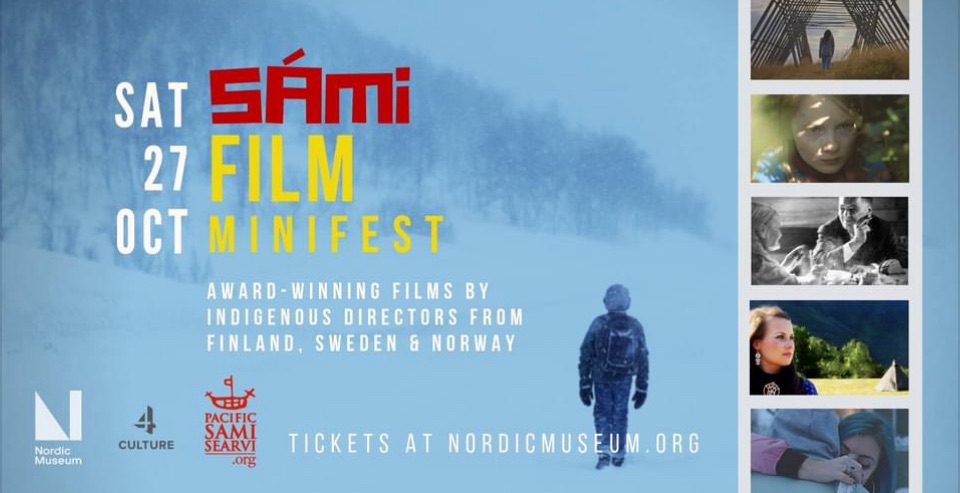
TL:DR — The 6th Sámi Film Festival is this Friday and Saturday. Select Sámi shorts are online worldwide (free with trial).

Last night at Elliott Bay Books, Bob and I heard two fascinating writers, Linnea Axelsson (Ædnan) and Sasha LePointe (Red Dirt) in a thought-provoking conversation about craft, colonization, and resistance. I had many questions for both but chose to ask Linnea about passages in Ædnan that perplexed me: one in particular was about Laestadian girls in scarves, whose parents had been photographed naked by race biologists.

Linnea’s answers were clarifying, and a punch to the solar plexus. I could dimly hear Bob recommending a film as my mind saw clouds of dark scarves drifting south from Pajala, across the Atlantic, over the Black Hills, draping this girl and that one, me, my mother, sisters, grandmother, all heads bowed.

Why?

Still today, Firstborn Laestadian women cover their heads in church and for home services. Since when, I wonder. Since Laestadius? I still have my first scarf, no bigger than a dinner napkin.

I directed my unruly mind back to the room, and scribbled notes.

We saw several familiar faces there. Amy we have known for a decade since meeting her and her mom at a Swedish Club breakfast (before either suspected Sámi ancestry). Stina, Amanda, Dwayne, and Steve, all longtime supporters of Sámi programming.

But there were so few, too few! This post is especially for Steve, who had not heard about the film fest this week (I thought I posted about it here but alas, only on Facebook. Too many platforms, too little time.)

Now to digress my (updated) Facebook post: in 2018, the first Sámi “minifest” was a shoestring effort, with a part-time museum staffer (Stina), donated films (generous friends) and pro bono graphics and stuff (moi). I was all in, and had a blast.

The films were:

Under Two Skies and Sparrooabbán (2016), Suvi West

Morit Elena Morit (2017), Anders Sunna, Inga Wiktoria Påve

Kaisa’s Enchanted Forest (2018), Katja Gauriloff

Solas Datter (2018), Sara Margarethe Oskal

Familiebildet (2013), Yvonne Thomassen

2018 Promo
The vibe that was vibing

That minifest grew out of an even minier (minnier?) fest, an afternoon of Sámi shorts on the last Sunday of the Nordic Lights Festival. Also, Superbowl Sunday! Yet in six years, the audience outgrew the tiny venue (SIFF theater at Seattle Center).

(I have many fond memories of that place. It’s where I saw Suddenly Sámi, Tundra Cowboy, and Arctic Superstar, and met the artist Royal Nebeker.)

The move to the beautiful new Nordic Museum in 2018 was a mixed blessing, as the ambient noise and light in Oberg Hall were, shall we say, suboptimal. So this year’s venue, Majestic Bay, will give the films their due, with professional light and sound, and a greeting from Tom Skerrit.

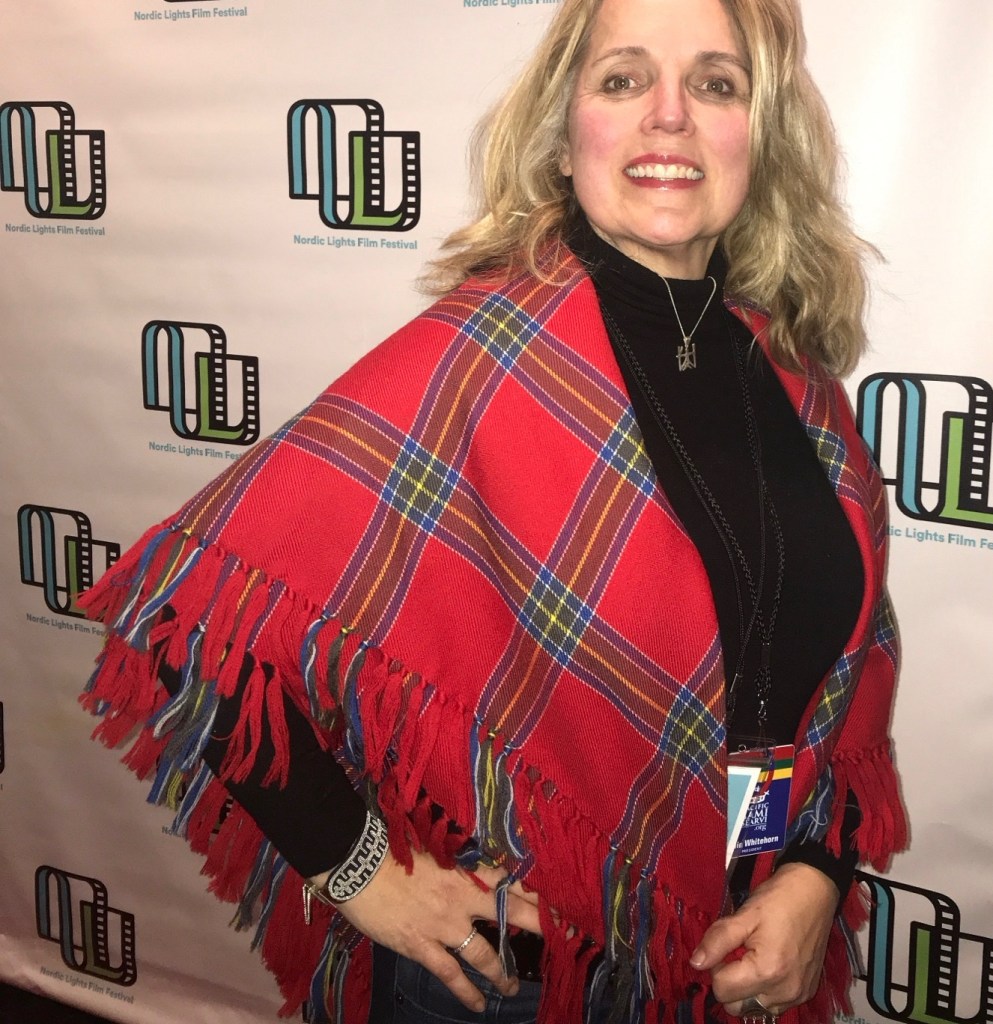
Some lucky little Laestadian girls in scarves grow up to wear wool liidni and silba (bracelet by Doris Risfjell). Note that I will be gray, not blonde, but equally proud and happy this Friday for the opening film, Je’vida, by Katya Gauriloff.

Katya’s films are true works of art: quiet beauty in the service of truth. She wrote Je’vida with Sámi poet Niilas Holmberg, cast an actress I loved in the Finnish film Compartment No. 6, and shot it in b&w. Swoon.

Still from Je’vida

I am also stoked to meet this year’s curator, Liselotte Wajstedt, who hails from Kiruna with a family history of Laestadianism that makes me wonder, could we be kin. Last year I saw her short film, Sire and the Last Summer, and powerful documentary Tystnaden i Sápmi (The Silence in Sápmi). And in 2022, on what I swear was the hottest day of a very hot Venice biennale, I found myself transported—in a lávvu with a 360-degree screen—by her magical Eadni (Mother).

HOT Árran 360, San Servolo, 2022

Yes, you can stream most of the films again this year, but if you can make it in person, please do.

And tell a friend?

Happy Sámi Day!

Found in Translation

Crystalline prose that reads like poetry and myth at once. There are intricate layers of beauty and meaning here in sparse clusters across a vast new landscape as I’ve never read before. The music of this book is old, and it is new, and it is old.

Tommy Orange, There, There and Wandering Stars

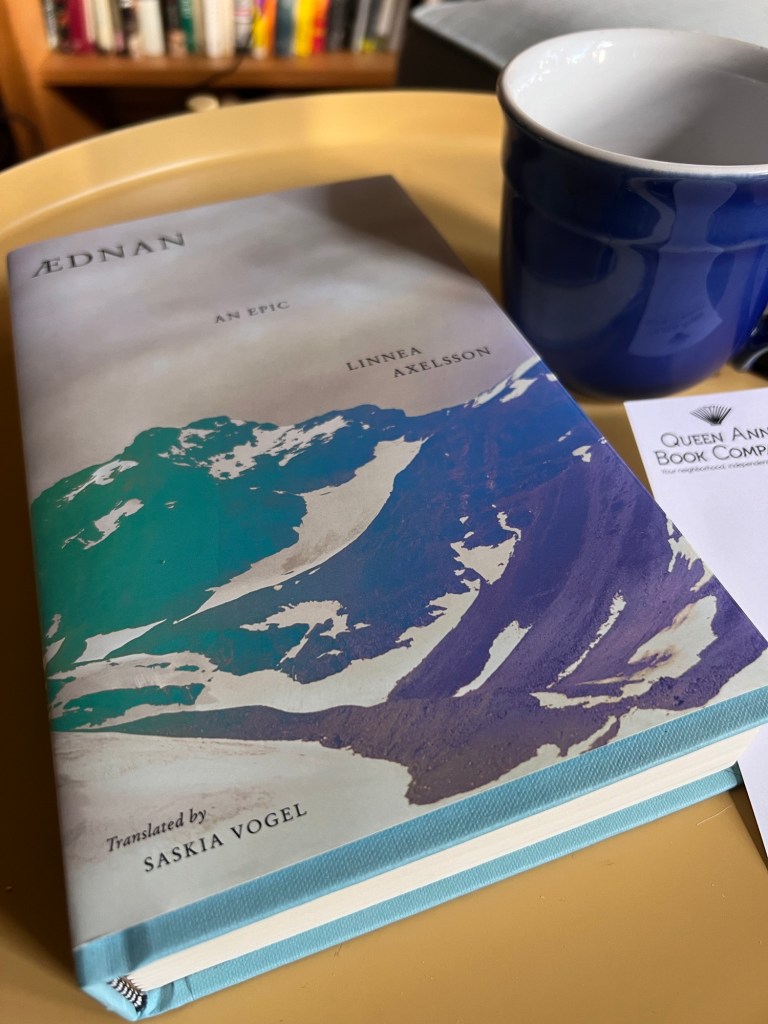
Since it was published in Sweden five years ago, I have been eager to read Linnea Axelsson’s much-celebrated Ædnan, so I was thrilled to receive it as a birthday gift this week.

It was nicely timed; the author will be signing books in Seattle next Monday.

Check out her golden Washington Post review.

The title Ædnan is an old North Sámi word for earth, land, mother, and woman. It shares the same root as eatnat, meaning much, a lot, great (from Proto-Samic eanëkën). I love how this one word holds the key to the Indigenous worldview, grounded in the experience of nature: as source, mother, abundance.

It occurs to me that Land Back, which has several meanings, is a call for universal rematriation. In Isaac Murdoch’s words, “people returning back and finding their place in those systems of life.” (Sadly the term still seems to activate more fear than understanding. Perhaps it could be reframed as Operation Prosperity Guardian?!)

I also love how eadnán appears so frequently in Sámi songs and poems, a few of which I have had the privilege of translating, most recently Mari Boine’s ballad Eadnán bákti (a Sámi poem by Kerttu Vuolab). “To Woman” is the English title.

Translating is always transcreating; in the process a new creature emerges, and one hopes it will fly. Sometimes the English words look like wings, sometimes like a clumsy giella (the Sámi word for both language and snare).

A bit like stuffing a fluttering, iridescent-feathered bird in a beat up old box that was designed for commerce, sports, or conquest. As some kid somewhere is intent on associating that box with farts in the Urban Dictionary.

I am consoled by the idea that my Sámi ancestors perceived language itself as the giella. The trap. After all, communication precedes and transcends words; it flows continuously through and between and inside and around us. Even in silence.

Ædnan contains a lot of silence. The physical heft of the book is not from ink, but from its snowy fields and margins. Evocative of Sápmi at this time of year.

I am eager to see how the book’s translator chose her snares. (I have bookmarked here her post about the process.)

If you read Ædnan, please let me know what you think.

Other local-ish events of interest:

Sámi Film Festival, with guest curator Lisolette Wajstedt, Seattle and online, Feb. 8-11

Vástádus eana – The answer is land Elle Sofe Sara in Vancouver, BC , Feb. 23-24

Wishing you a happy Sámi álbmotbeaivi next week.

Stay warm!